Best Surfboard East Coast: Your Ultimate Regional Guide
Discover the **best surfboard for East Coast** conditions, focusing on small, inconsistent waves and diverse beach breaks. This guide provides expert advice on selecting the perfect board, from **east coast fish board** designs to versatile **funboard for small waves**, ensuring you catch more rides.
Surfboard Life · April 11, 2026 · 11 min read
For East Coast surfers, the best surfboard for East Coast waves isn't about chasing the biggest barrels but maximizing fun and wave count in often small, inconsistent conditions. The ideal board for the East Coast prioritizes speed generation, paddle power, and maneuverability in weaker surf, often featuring flatter rockers and fuller volumes. This guide will dive deep into selecting the perfect quiver for the diverse East Coast shoreline, ensuring you're always ready for anything from glassy rollers to choppy beach breaks.
Unlocking East Coast Waves: Why Your Board Matters
The East Coast, stretching from sun-drenched Florida to the chilly shores of New England, offers a unique surfing experience. Unlike the powerful, consistent swells of the Pacific, East Coast waves are typically smaller, mushier, and often characterized by challenging east coast beach break conditions. This means your equipment choice is paramount. Surfers here need boards designed to excel in less-than-perfect surf, generating speed and carrying momentum through flatter sections. For a comprehensive overview of board types, check out our Board Types Guide.
Experienced shapers consistently emphasize that "the right board for the East Coast is one that prioritizes glide and forgiveness." This often translates to boards with more volume, wider outlines, and specific rocker profiles that help them plane efficiently in weaker waves. Without the proper small wave surfboard, you'll find yourself struggling to catch waves and feeling bogged down once you're riding.
The Anatomy of an East Coast Performer
Understanding a surfboard's components is crucial when selecting the best surfboard for East Coast conditions. Visit our Surfboard Anatomy page for a detailed breakdown. Key features for East Coast boards often include:
- Rocker: Flatter rockers are preferred for speed generation and paddle power in weaker waves.
- Outline: Wider outlines, especially in the nose and tail, increase stability and lift.
- Concaves: Subtle single to double concaves can help channel water and add lift.
- Tail Shapes: Wider tail shapes like a swallow, squash, or fish tail provide more lift and release in small surf.
- Volume: Crucial for paddle power and stability. Use our Volume Calculator to find your ideal range. A good rule of thumb for East Coast surfing is to lean towards the higher end of your volume range.
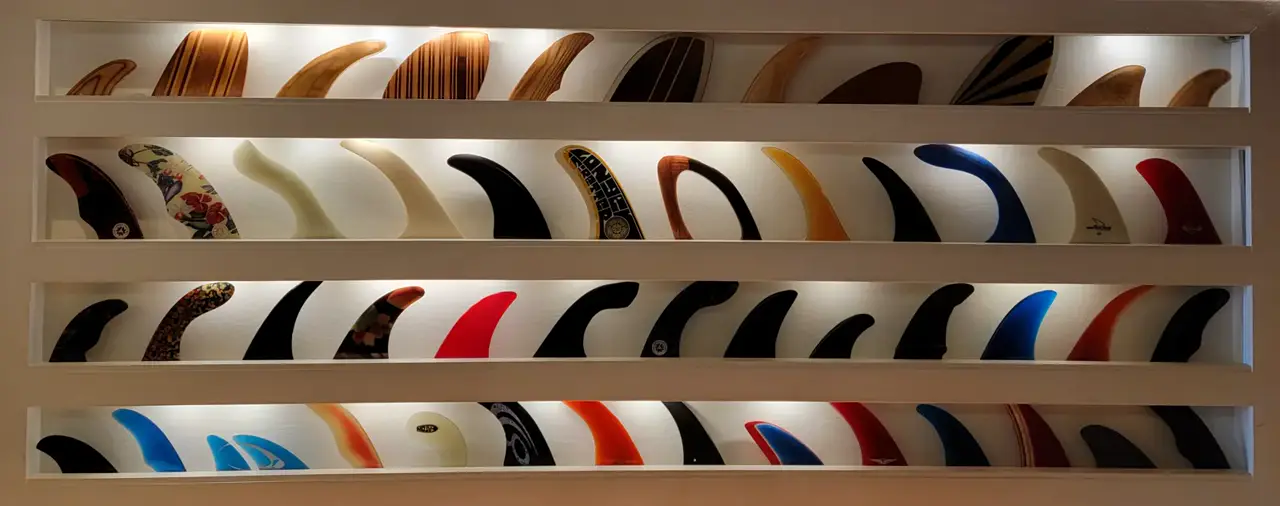
Pro Tip: Don't be afraid to experiment with fin setups! While thrusters are standard, twin fin or quad fin setups can significantly enhance speed and maneuverability in small wave surfboard conditions. Learn more about your options at our Fin Systems Guide.
Top Board Types for the East Coast: Finding Your Speed
When it comes to mastering the east coast beach break, certain board types consistently outperform others. These boards are engineered to maximize your wave count and fun factor in the often challenging conditions.
The Indispensable East Coast Fish Board
No discussion of East Coast surfing is complete without highlighting the east coast fish board. These boards are an absolute staple for a reason. Characterized by their wide, retro outline, flatter rocker, and swallow tail, fish boards excel at catching waves easily and generating incredible speed in small, mushy conditions. Their increased surface area provides excellent lift, making them ideal for navigating the weaker East Coast swell. Many shapers will tell you, "A well-designed fish is often the most ridden board in an East Coast quiver."
Popular east coast fish board designs often feature a twin fin or quad fin setup, further enhancing their speed and loose feel. They are perfect for those head-high or smaller days where other boards might struggle. For deeper dives into specific models, check out reviews on sites like Surfline (surfline.com).
Funboards and Hybrids: The Versatile Choice
For surfers seeking performance that bridges the gap between shortboards and longboards, funboard for small waves and hybrid surfboards east coast are excellent choices. These boards offer a fantastic blend of paddle power, stability, and maneuverability.
- Funboards: Typically ranging from 6'6" to 8'0", funboards offer ample volume and stability, making them incredibly user-friendly. They catch waves with ease and provide a stable platform for progressing surfers. They are a fantastic entry point for those learning to navigate east coast beach break conditions (see our Learn to Surf guide).
- Hybrid Surfboards East Coast: These boards combine elements from different board types, often featuring a wider nose for paddle power, a curvier outline in the middle for turning, and a performance tail. Many popular models, like a modern stubby shortboard or a performance longboard, fall into this category. They are designed to be a one-board quiver for many East Coast surfers, capable of handling a variety of swell sizes up to head-and-a-half.
Pro Tip: When choosing a funboard or hybrid, pay close attention to the east coast surfboard dimensions. A slightly wider and thicker board will significantly improve your wave count and enjoyment in typical East Coast surf. Don't be afraid to go a few liters higher than you would for a high-performance shortboard.
Dialing in Your East Coast Surfboard Dimensions
Getting the east coast surfboard dimensions right is perhaps the most critical factor for enjoying your time in the water. For an average adult East Coast surfer (150-190 lbs), optimal dimensions for a dedicated small wave board or east coast fish board often look like this:
| Board Type | Length | Width | Thickness | Volume (Liters) | Target Wave Size | | :------------------------ | :------------------- | :------------------- | :------------------- | :-------------- | :---------------------- | | East Coast Fish Board | 5'4" - 5'10" | 20" - 22" | 2.25" - 2.8" | 28 - 38 | Knee-High to Head-High | | Hybrid/Funboard | 6'0" - 7'6" | 20.5" - 23" | 2.5" - 3.25" | 35 - 55 | Knee-High to 1.5x Head | | Small Wave Performance | 5'8" - 6'2" | 19" - 20.5" | 2.3" - 2.7" | 27 - 35 | Waist-High to Head-High|
(These are general guidelines; always use our Volume Calculator for personalized recommendations). For reference, many East Coast shapers will often recommend an extra 0.5-1 liter of volume compared to what a West Coast surfer of the same weight might ride for a similar wave height. This additional volume provides the necessary paddle power and glide for the weaker East Coast swell.
Performance Shortboards for the East Coast
While the focus is often on small wave boards, it's possible to ride a performance shortboard on the East Coast, especially during hurricane season or strong nor'easters. When opting for a shortboard, look for designs that still emphasize speed and drive: slightly wider outlines, lower entry rocker, and vee or single-to-double concaves. The Channel Islands Flyer or a Firewire Seaside (with its excellent speed-generating capabilities) are classic examples cited on World Surf League (worldsurfleague.com) for mixed conditions, often fitting the bill for larger East Coast days.
Seasonal Surfboard Guide East Coast: Adapting Your Quiver
The East Coast experiences distinct seasons, each bringing its own unique swell patterns. A smart surfer will adapt their quiver, as outlined in this seasonal surfboard guide east coast.
Spring: Rejuvenation and Variability
Spring can be highly variable on the East Coast. You'll get lingering winter swells, but also increasingly flat spells. This is the perfect time for your all-around hybrid surfboards east coast or a versatile east coast fish board. Keep a funboard handy for beginner-friendly days or when the swell is really inconsistent. Water temperatures start to rise, but wetsuits are still essential for most regions.
Summer: Small Waves and Funboards Reign
Summer often means smaller, weaker, and less consistent waves. This is the prime season for your dedicated small wave surfboard, east coast fish board, and funboard for small waves. Many East Coast surfers will pull out longboards exclusively during the summer months to maximize wave count. The goal during summer is pure enjoyment and maximizing time in the water, even if the waves aren't pumping. Embrace the smaller conditions with a board made for it!
Fall: The Peak Performance Season
Fall is arguably the best surfboard east coast season for many. Hurricane season (late summer into fall) can deliver powerful, consistent swells, and nor'easters start to brew, offering larger, cleaner waves. This is when your more performance-oriented shortboards come alive. However, even during peak fall, you'll still have plenty of days where your hybrid surfboards east coast or trusty fish will be your best friend. A diverse quiver is key.
Winter: Cold, Powerful, and Challenging
Winter on the East Coast can offer some of the most powerful and hollow waves, but at the cost of freezing water and air temperatures. This is when thicker wetsuits are mandatory, and bigger, more performance-oriented boards from your quiver might be utilized. However, even in winter, many days will feature smaller, mushier waves, making a robust east coast fish board or a high-volume shortboard still very relevant. Always dress appropriately for the cold; our Repair Center also has tips on winter board care.
Pro Tip: Consider traveling with a multi-board bag during the fall or spring to cover all bases. You never know what the ocean will deliver, and having options means more surf time.
Regional Breakdown: East Coast Wave Characteristics
Understanding the subtle differences in wave characteristics along the East Coast can further refine your board choice. This often-overlooked detail is crucial for creating the most effective quiver and choosing the best surfboard for East Coast conditions in your specific area.
Florida: The Land of Small, Clean Waves
Florida's waves are typically smaller and cleaner due to offshore sandbars. Here, a high-volume east coast fish board, a classic funboard for small waves, or even a longboard will be your workhorse. Boards that generate speed easily are paramount, as the waves often lack power.
Carolinas: Diverse Beach Breaks and Hurricane Swell
The Carolinas offer a mix of punchy beach breaks and longer point/reef breaks at certain spots. This region benefits greatly from hybrid surfboards east coast designs that can handle smaller, disorganized surf but also perform when a hurricane swell lights up the coast. You'll want a quiver that extends from a nimble fish to a capable shortboard.
Mid-Atlantic (VA, MD, DE, NJ): Shifty, Powerful Beach Breaks
This stretch of coast is dominated by powerful, often shifty east coast beach break conditions. Nor'easters and hurricane swells can create serious waves, but flat spells are common. For the average day, a forgiving small wave surfboard or east coast fish board is perfect. When it's pumping, a step-up or a slightly more performance-oriented shortboard with good drive will be invaluable. The key here is adaptability.
Northeast (NY, RI, MA, ME): Cold, Rocky, and Untamed
The Northeast offers a diverse range of waves, from exposed beach breaks to rocky points. Waves here can be powerful, especially during fall and winter. Water temps are cold, so don't forget winter gear. A robust hybrid surfboards east coast or a fish that can get into waves early is vital. While there are days for high-performance boards, many sessions will benefit from the extra paddle power and stability of a slightly larger, more forgiving board. Stab Magazine (stabmag.com) often highlights how crucial proper float and volume are in colder, less consistent regions.
Your Quiver Strategy: Beyond Just One Board
To truly master East Coast surfing, a multi-board quiver is the answer. As an experienced surfer once advised, "Think of your quiver as a toolkit, not a single hammer." While a single funboard for small waves or an east coast fish board might be your daily driver, having options will significantly expand your surf days and enjoyment.
Consider a three-board quiver for optimal East Coast performance:
- The Daily Driver (Small Wave Machine): This is your east coast fish board or dedicated small wave surfboard. Length: 5'4"-5'10", high volume, wide outline. This board will get the most use.
- The Versatile Performer (Hybrid Hero): A hybrid surfboards east coast or a slightly larger performance shortboard. Length: 6'0"-6'6", moderate volume, good blend of paddle and turning. This board shines when waves have a bit more push.
- The Longboard/Groveler (Maximum Wave Count): A longboard (8'0"+) for tiny, slow days, or a specialty groveler (e.g., a really short, fat fish or an even higher-volume stubby) for those truly dismal conditions. This ensures you can always get in the water.
For personalized recommendations tailored to your skill level, local spot, and specific east coast surfboard dimensions, our the board finder can provide invaluable insights. Furthermore, our Board Finder Quiz can help you narrow down your options based on your preferences.
Conclusion: Ride More Waves, Have More Fun
Choosing the best surfboard for East Coast conditions isn't about blind loyalty to a single shape; it's about understanding the unique characteristics of East Coast waves and selecting equipment that empowers you to catch more rides and have more fun. Whether it's a zippy east coast fish board, a stable funboard for small waves, or a versatile hybrid surfboards east coast, the right dimensions and design will make all the difference. Remember to consider the seasonal variations outlined in our seasonal surfboard guide east coast to keep your quiver dialed year-round. Happy shredding!
Frequently Asked Questions (FAQ)
Q: What are the optimal board dimensions for average East Coast beach break conditions?
A: For average East Coast east coast beach break conditions, optimal dimensions for an adult surfer (150-190 lbs) typically involve boards with increased volume. A fish board around 5'6"-5'10" with 30-35 liters, or a hybrid around 6'4"-7'0" with 38-45 liters, will offer excellent paddle power and speed in the often weaker East Coast swell.
Q: How should East Coast surfers adjust their quiver for seasonal swell patterns?
A: East Coast surfers should adjust their quiver seasonally by favoring small wave surfboard options like fish and funboards in summer. Fall and winter may call for slightly more performance-oriented hybrids or shortboards for larger swells, but versatile east coast fish board designs remain essential year-round for inconsistent days, as highlighted in our seasonal surfboard guide east coast.
Q: Which specific East Coast shaper brands offer the best value for performance?
A: Many local East Coast shapers, such as WRV (Wave Riding Vehicles), Mayhem (Lost Surfboards typically have East Coast reps/dealers), and local small-batch shapers specific to your area, offer excellent value. These shapers often have firsthand experience with east coast beach break conditions, tailoring designs like the east coast fish board for optimal performance.
Q: How do hybrid board designs compare to traditional shapes in East Coast conditions?
A: Hybrid surfboards East Coast designs generally outperform traditional high-performance shortboards in most East Coast conditions due to their enhanced paddle power, stability, and speed generation in weaker waves. They combine elements like wider noses, flatter rockers, and more forgiving outlines, making them more versatile than pure shortboards for the region's typical small wave surf. Traditional shapes excel only on the rarer, more powerful days.