Best Surfboards for Cold Water Surfing: Buyer's Guide
Looking for the best surfboards for cold water surfing? Freezing swells demand extra paddle power, thicker glassing, and dialed-in dimensions to offset heavy neoprene. Our comprehensive guide unpacks volume calculations, epoxy versus PU performance in frigid seas, and top board designs for cold winter waves.
Surfboard Life · October 22, 2026 · 12 min read
Best Surfboards for Cold Water Surfing: The Ultimate Buyer's Guide
The best surfboards for cold water surfing feature 5% to 10% more volume than your standard warm-water craft, wider outlines, flatter entry rockers, and resilient construction. These design attributes offset the heavy weight of 5/4mm neoprene, cold-water fatigue, and denser water physical dynamics, ensuring maximum wave count, paddle efficiency, and speed in frigid oceans.
Surfing in sub-55°F (12°C) or near-freezing water is a completely different discipline than tropical surfing. Your body burns calories at an accelerated rate, heavy rubber limits shoulder mobility, and water density changes how your board planes across the surface. Whether you are facing heavy Scottish slabs, frigid Pacific Northwest beach breaks, or icy winter swells in New England, riding the wrong equipment will leave you exhausted, cold, and under-gunned.
In this complete cold water surfboard guide, we break down the physics of winter lineups, dissect the real-world math behind cold water buoyancy, compare epoxy and polyurethane durability in freezing temperatures, and reveal the exact surfboard profiles you need to conquer winter seas.
What Makes the Best Surfboards for Cold Water Surfing?
Selecting a dedicated winter surfing surfboard is not as simple as picking your favorite summer shortboard and adding two inches of length. Frigid conditions alter the interplay between hydrodynamics, materials, and human physiology.
Cold Water Performance Formula:
[Denser Water + 6-10 lbs Wet Neoprene + Reduced Mobility] = Need for +5-10% Volume & Flatter Rocker
1. Water Density and Planing Lift
Cold water is physically denser than warm water. Water molecules contract as temperatures drop toward freezing, which technically provides marginally more hydrodynamic lift. However, this slight lift is vastly overshadowed by the physical toll on the surfer and the drag created by thick neoprene, hood seams, and bulky booties.
2. The Weight of Winter Armor
A dry 5/4mm hooded wetsuit, 7mm booties, and 5mm claw gloves weigh around 7 to 9 pounds. Once saturated with salt water, that rubber suit can add between 9 and 14 pounds (4 to 6.3 kg) of dead weight to your body. That extra mass directly presses your board deeper into the water column when paddling.
3. Reduced Muscle Cadence
Cold water saps human muscle efficiency. Your paddle stroke cadence drops by an estimated 15% to 25% when wearing a restrictive hooded suit compared to boardshorts. To catch waves early and glide into the pocket before steep winter sections shut down, your board must generate early momentum through smart design.
To understand how board design elements influence this balance, explore our breakdown of Surfboard Anatomy.
Surfboard Volume for Cold Water: Calculating the Rubber Tax
One of the most common mistakes surfers make when building a cold-water quiver is under-voluming their boards. When calculating your target surfboard volume for cold water, you must incorporate what shapers call the "neoprene tax."
As a foundational rule, experienced shapers recommend increasing your standard warm-water surfboard volume by 5% to 10% for full winter setups.
- 3/2mm Fullsuit (Spring/Early Autumn): Add 0.5 to 1.5 Liters (+3%)
- 4/3mm Fullsuit with Boots (Mid-Late Autumn): Add 1.5 to 2.5 Liters (+5%)
- 5/4mm or 6/5mm Hooded Suit, Boots, and Gloves (Deep Winter): Add 3.0 to 5.0+ Liters (+8% to 10%)
Pro Tip: Never add volume purely by blowing out the rail thickness. A board with overly fat, buoyant rails will skate out and struggle to bite into icy, hard-surfaced wave faces. Instead, gain volume through wider center dimensions, subtle chest-width extensions, and flatter deck profiles.
Cold Water Sizing Calculation Example:
Standard Summer Shortboard: 30.0 L
Winter 5/4mm Neoprene Tax (+8%): +2.4 L
Ideal Winter Shortboard Volume: 32.4 - 33.0 L
To calculate your precise baseline float based on your weight and fitness level before applying the winter multiplier, use our interactive Volume Calculator.
Epoxy vs Polyurethane Surfboard Cold Water Performance
The debate over epoxy vs polyurethane surfboard cold water construction is intense among high-latitude surfers. Both materials react differently to sub-zero air and freezing water temperatures.
Polyurethane (PU) with Polyester Resin
Polyurethane (PU) has been the gold standard since the post-war board building boom described in our Surfing History archives. In cold water, PU offers distinct advantages:
- Damped Flex in Chattery Conditions: Cold ocean swells are frequently accompanied by strong offshore or side-shore winter winds. PU foam has a naturally deadened, dampened flex that cuts through textured, freezing chop smoothly.
- Thermal Stability: PU foam contracts less dramatically than low-density EPS when moving from a warm vehicle into 38°F (3°C) ocean water.
- Ease of Emergency Repairs: Polyester and standard vinyl-ester resins cure predictably and are easier to fix when winter rocks or icy shorelines cause a ding. Check our Repair Center for cold-weather cure time adjustments.
Expanded Polystyrene (EPS) with Epoxy Resin
Epoxy surfboards are built using lightweight EPS foam cores wrapped in high-tensile fiberglass and epoxy resin. When assessing an epoxy vs polyurethane surfboard cold water setup, consider these factors:
- Superior Durability: Epoxy resin is significantly more impact-resistant than polyester. In winter, when walking down iced cobblestone trails or duck diving heavy shorebreak onto shallow sandbars, epoxy saves you from shattered rails.
- Higher Buoyancy-to-Weight Ratio: EPS foam contains more air pockets per square inch, providing greater mechanical float. This allows you to keep overall board dimensions tighter while retaining the buoyancy required for a 5/4mm suit.
- Potential Drawbacks: In freezing temperatures, ultra-light epoxy boards can feel overly stiff, corky, and "chattery" on wind-blown, icy wave faces. Top athletes tracked by the World Surf League generally opt for custom, slightly heavier glassing schedules on their cold-water epoxy step-ups to maintain drive.
Construction Comparison for Winter Surfing
| Feature | Traditional PU/Poly | Standard EPS/Epoxy | High-Density Epoxy (e.g., Lib Tech / Tuflite) | Soft-Top (Foamy) | | :--- | :--- | :--- | :--- | :--- | | Cold Shock Resistance | Moderate | High | Extreme | Maximum | | Chop Absorption | Excellent | Fair (Can feel chattery) | Good | Excellent | | Paddle Lift in Neoprene| Standard | Superior (+10% perceived lift) | Superior | Extreme | | Weight | Moderate-Heavy | Very Light | Moderate | Heavy | | Ding Repair in Winter | Fast & Easy | Requires Epoxy Resin | Specialized Kits | Difficult | | Ideal Wave Conditions | Clean to choppy, hollow | Small-to-medium clean surf | Rocky points, heavy reefs | Shorebreak, closeouts |
Choosing the Right Winter Surfing Surfboard by Wave Type
Winter brings powerful, low-pressure storm systems, but not all winter swells produce clean, barrel-riding conditions. You need the right outline matched to the specific wave energy of your local break.
1. Powerful, Heavy Winter Swells (Reefs & Point Breaks)
When long-period groundswells strike deep-water reefs or exposed points, you need hold, paddle acceleration, and control.
- The Choice: The Step-Up or Rounded-Pin Hybrid.
- Specs: 2 to 4 inches longer than your everyday board, +2 to +4 Liters of volume, rounded-pin tail, and pulled-in nose.
- Why It Works: The rounded pin keeps your tail engaged in steep faces at high velocity, preventing wipeouts when knifing through thick, cold lips. According to wave analysis from Surfline, long-period winter swells travel faster across the ocean, demanding boards that can match that high entry speed.
2. Shifty, Heavy Beach Breaks
Winter beach breaks are notorious for sweeping currents, bone-chilling duck dives, and fast, hollow sections that close out without notice.
- The Choice: The Wide-Point-Forward Fish or Hybrid Shortboard.
- Specs: Standard board length (or 1 inch shorter), slightly wider nose, medium-low entry rocker, swallow tail or thumb tail.
- Why It Works: Extra foam under the chest allows you to scramble against brutal rip currents. The wide point forward lets you catch the wave early before it pitches, while the refined tail allows for fast direction changes.
For a full breakdown of board outlines, shapes, and tail options, consult our comprehensive Board Types Guide.
Pro Tip: When sizing a step-up for winter, choose a five-fin box setup. Cold, powerful waves often demand the directional hold and drive of a quad setup to clear heavy foam balls, whereas clean, curling point waves suit a thruster. Learn how to configure your tabs in our Fin Systems Guide.
Critical Winter Hardware & Board Care: Avoiding Cold Weather Failure
A cold water surfboard guide is incomplete without addressing the hardware that connects you to your craft. Sub-freezing air and icy water cause physical materials to stiffen and become brittle.
Cold Water Maintenance Checklist:
[ ] Cold or Ice-Cold Specific Wax Applied
[ ] Heavy-Duty 7mm-8mm Leash (Urethane gets brittle below 45°F)
[ ] Inspect Box Screws (Avoid overtightening brittle winter plastic)
[ ] Progressive Board Acclimatization (Prevent thermal delamination)
Cold-Water Wax Formulas
Warm water wax on a winter board is like spreading plastic across your deck—it turns rock hard and slick as ice. You must use soft, tacky cold-water or "ice-cold" wax formulas (typically formulated for water below 55°F/13°C and sub-48°F/9°C respectively).
- Application Tip: Strip your summer basecoat completely. Build a delicate crosshatch base using a cool-water wax, then apply an ultra-sticky cold-water topcoat. The bumps must be soft enough for bootie rubber to compress into and grip securely.
Leash Selection in Sub-Zero Temps
Do not use ultra-thin 5mm "comp" leashes in winter. Polyurethane leash cords stiffen dramatically in icy water and lose their elastic memory.
If you take a 6-foot set on the head in 40°F water while wearing boots and a thick suit, that extra drag puts double the tension on your cord. Use a 7mm or 8mm heavy-duty leash with stainless steel swivels to prevent snapping in freezing impacts.
Preventing Thermal Shock Delamination
Moving a board straight from a heated 72°F (22°C) apartment or car interior directly into 35°F (2°C) salt water causes the air inside EPS and PU foam to rapidly contract. While less dangerous than going from freezing to boiling heat, sudden thermal swings over time can stress the resin-to-foam bond.
Allow your board to acclimate in your vehicle's trunk or an unheated garage before paddling into freezing surf.
If you are just starting your cold-water journey, review our foundational tutorials in Learn to Surf to stay safe during challenging conditions.
4 Recommended Cold-Water Board Profiles
To make your decision straightforward, we have grouped the best surfboards for cold water surfing into four battle-tested categories suited for different waves and surfer profiles.
                      COLD WATER QUIVER SELECTOR

   WAVE SIZE          CLEAN / POWERFUL             CHOPPY / SHIFTY
   -----------------------------------------------------------------
   Overhead+          [Performance Step-Up]        [Mid-Length Gun]
   Chest-to-Head      [Performance Hybrid]         [Cold-Water Groveler/Fish]
1. The Performance Cold-Water Hybrid
- Best For: All-around daily winter conditions from chest-high to slightly overhead.
- Characteristics: Modest rocker, foam carried under the chest, pulled-in squash or round tail, 5-fin convertible setup.
- Why It Excels: Provides the paddle speed of a fish with the turning radius of a high-performance shortboard, compensating for the weight of your wetsuit without feeling sluggish.
2. The Heavy Step-Up (The Winter Charger)
- Best For: Powerful groundswells, double-overhead point breaks, and heavy barreling reef passes.
- Characteristics: 3 to 5 inches longer than your standard shortboard, round-pin tail, extra fiberglass lamination (e.g., 6oz + 4oz deck, 6oz bottom).
- Why It Excels: Cuts through thick chop, tracks with control on steep drops, and provides the paddle acceleration needed to escape menacing winter cleanup sets.
3. The Cold-Water Fish / Twin Keel
- Best For: Weak, gutless winter windswells and mushy point breaks.
- Characteristics: Flat rocker, wide parallel outline, classic twin keel fins, deep swallow tail.
- Why It Excels: The wide planing surface creates instantaneous lift, letting you skate across cold, fat wave sections without sinking, even under the weight of boots and gloves.
4. The Modern Mid-Length
- Best For: Maximum wave count, sweeping currents, and surfers prioritizing flow over aggressive snaps.
- Characteristics: 6'8" to 7'6" length, sleek hull or 2+1 fin configuration, tapered rails.
- Why It Excels: Effortlessly overcomes sweeping rip currents, gets you into waves 15 yards outside the pack, and glides smoothly through cold-water chop.
Still unsure which design matches your local break? Use our automated Board Finder Quiz or ask our intelligent the board finder for personalized, real-time board recommendations based on your local water temperature.
Pro Tips for Dominating Cold Lineups
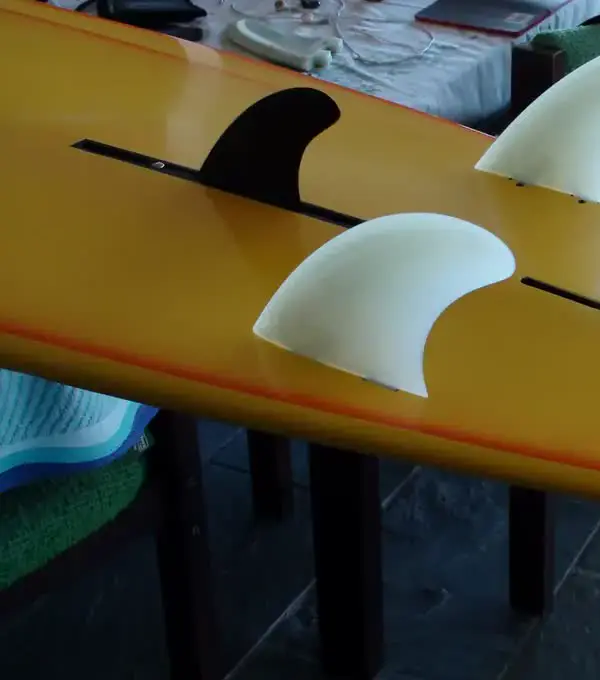
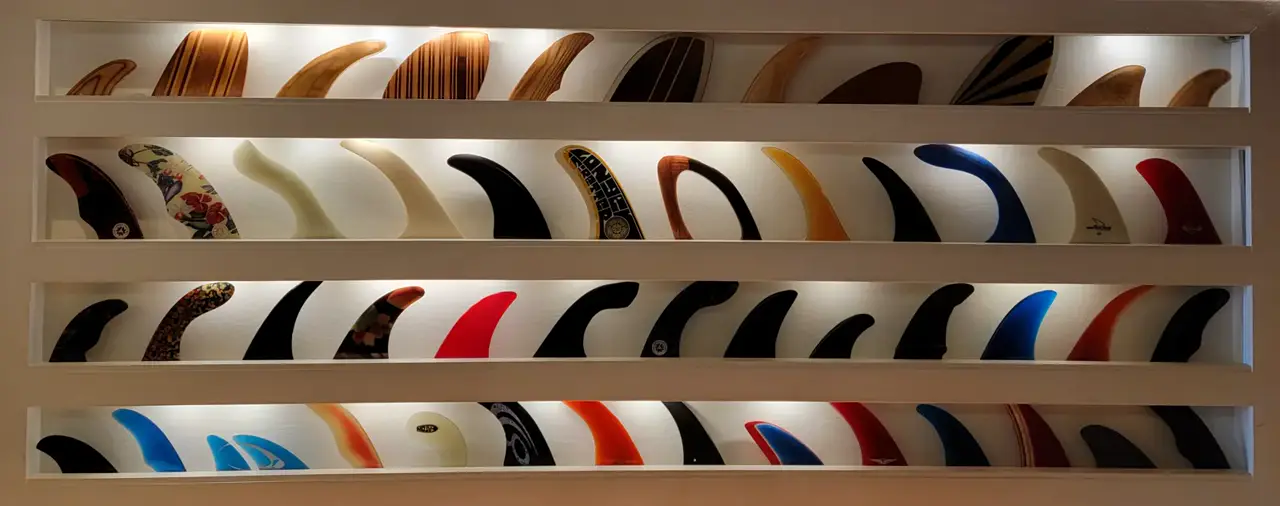
Pro Tip: Size Up Your Fin Templates. Because cold water is denser, you get slightly more lift and resistance against your fin faces. However, because you are heavier with your wetsuit, many surfers experience fin release or tail-slide. If you ride Medium fins in summer, consider bumping up to a Large template with a stiff carbon or fiberglass base during winter for solid hold.
Pro Tip: Pre-Warm Your Deck Pad. Traction pad adhesive can turn brittle and peel off in freezing waters if not bonded properly. Apply your traction pad at room temperature, press it firmly with weight overnight, and let it cure for a full 48 hours before exposing it to freezing ocean temperatures.
Pro Tip: Watch the Glassing Schedule. If you order a custom winter surfing surfboard, tell your shaper you are surfing in near-freezing conditions. Ask for a stronger glass schedule (like a dual 4oz deck with a 4oz wrap, or a 6oz/4oz combo). Cold-water waves break with immense hydraulic power, and standard ultra-light 4oz summer glassing will snap far more easily.
According to equipment roundups in Stab Magazine, pro surfers testing boards in high-latitude regions like Iceland and Northern Japan consistently run heavier blanks and reinforced stringers to prevent snaps in heavy, frigid swells.
Frequently Asked Questions
How much volume should I add to my board for cold-water surfing?
Add between 2 and 5 liters (approximately 5% to 10% more volume) to your standard warm-water surfboard volume. If you are wearing a 5/4mm or 6/5mm wetsuit with boots, gloves, and a hood, lean toward the 8% to 10% volume increase to offset the 8 to 14 pounds of waterlogged rubber and maintain paddle efficiency.
Is an epoxy or polyurethane surfboard better for cold water?
Both have clear pros and cons. Polyurethane (PU) boards provide a smoother, dampened flex that cuts through cold, wind-chopped water effectively. Epoxy surfboards, while stiffer and slightly more chattery on windy wave faces, offer superior impact durability against rocky shorelines and deliver a higher buoyancy-to-weight ratio to combat heavy wetsuit weight.
Do surfboards crack or break more easily in freezing temperatures?
Yes. Cold air and freezing water cause fiberglass and resin to stiffen, reducing structural elasticity. Heavy winter shorebreak combined with rigid fiberglass makes boards more prone to cracking, creasing, and snapping upon violent impact. Stronger lamination (such as adding a 6-ounce glass deck) is highly recommended for winter surfboards.
Do I need different fins for cold water surfing?
Yes, upgrading your fins can drastically improve winter performance. Because you weigh more in full neoprene and winter waves are generally more powerful, swapping your soft, flexible summer fins for stiffer fiberglass or carbon-reinforced fins provides better hold, prevents unwanted slides, and produces the drive necessary to navigate heavy winter sections.
Final Thoughts
Winter surfing offers empty lineups, raw groundswells, and some of the most rewarding sessions of the year—provided your equipment matches the environment. By factoring in the neoprene tax, selecting the right construction for your local breaks, and dialing in your surfboard volume for cold water, you will stay warm, catch more waves, and perform at your peak all winter long.
Ready to find your ideal winter setup? Run your numbers through our Volume Calculator, explore diverse shapes in our Board Types Guide, and get personalized recommendations with our Board Finder Quiz today.