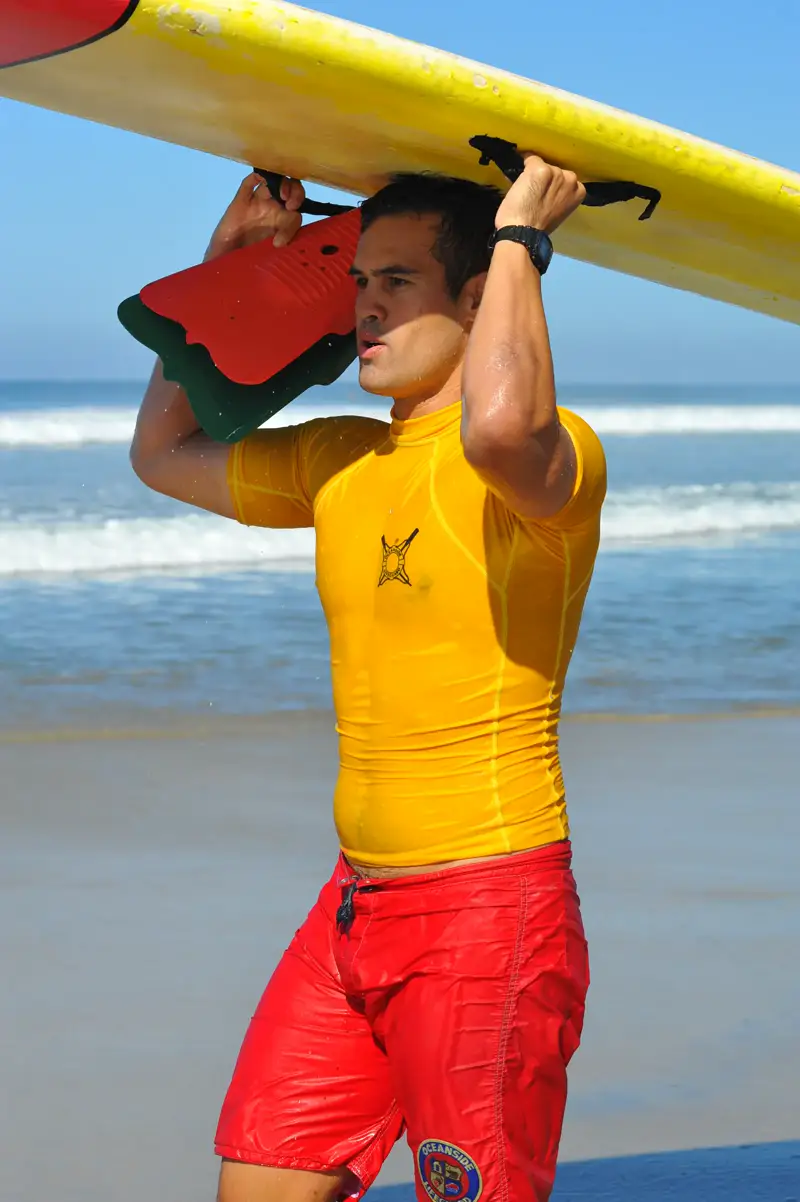
A yellow foam surfboard carried along the beach
Wikimedia Commons / Yellow Foam Surfboard
Beginner Learning Path

Your Journey Starts Here

Surfing is a lifelong pursuit. This guide walks you through each phase of progression, from your first paddle to confident performance surfing.

5 Phases

Clear progression stages

20 Milestones

Measurable goals

1-3 Years

To competent surfing

Lifetime

To master

The Learning Path

Each phase builds on the last. Don't rush - solid foundations make advanced surfing possible.

1

Building Foundations

1-3 months (surfing weekly)

Your first experiences in the water. Focus on comfort, safety, and basic wave mechanics.

Milestones

  • Comfortable in ocean conditions
  • Can identify safe zones and rip currents
  • Understands basic surf etiquette
  • Can pop up to feet consistently on whitewater

Recommended Board

Soft-top foam board, 8-9ft. Maximum stability and forgiveness while you learn fundamentals.

2

Wave Catching

3-8 months

Transitioning from whitewater to catching real waves. Timing and positioning become key.

Milestones

  • Can read wave sets and anticipate breaks
  • Paddles into green (unbroken) waves
  • Consistent pop-up on green waves
  • Basic bottom turn after takeoff

Recommended Board

8ft funboard or high-volume mini-mal. Still forgiving but starts to feel more like a 'real' board.

3

Board Control

6-18 months

Learning to maneuver and generate speed. Your surfing starts to look intentional.

Milestones

  • Consistent bottom-to-top surfing
  • Can generate speed through pumping
  • Basic cutbacks and direction changes
  • Comfortable duck diving

Recommended Board

7-7'6" funboard or mid-length. Less volume starts allowing more dynamic surfing.

4

Performance Surfing

1-3 years

Executing maneuvers with intention. Speed, power, and flow come together.

Milestones

  • Powerful, driving bottom turns
  • Can complete full cutbacks
  • Top turns with lip contact
  • Reading waves 2-3 sections ahead

Recommended Board

Shortboard or performance hybrid. Volume matched to skill and wave type.

5

Refinement & Style

Ongoing journey

Developing your personal style and surfing a variety of equipment confidently.

Milestones

  • Consistent critical maneuvers
  • Multiple board types in quiver
  • Personal style and approach
  • Can surf well in most conditions

Recommended Board

Multiple boards for different conditions. Understanding what each tool does best.

Common Questions

Answers to the questions every beginner asks.

Gear

A first-board kit

A long soft-top, wax for the water you actually surf, a leash once you are on a hard board, and a rash guard or a 3/2 if the water asks for it.

Surfboard Life participates in the Amazon Associates Program. Links below are affiliate links: if you buy, we may earn a commission at no extra cost to you. We only link ASINs we checked, and we do not invent ratings. Affiliate disclosure.

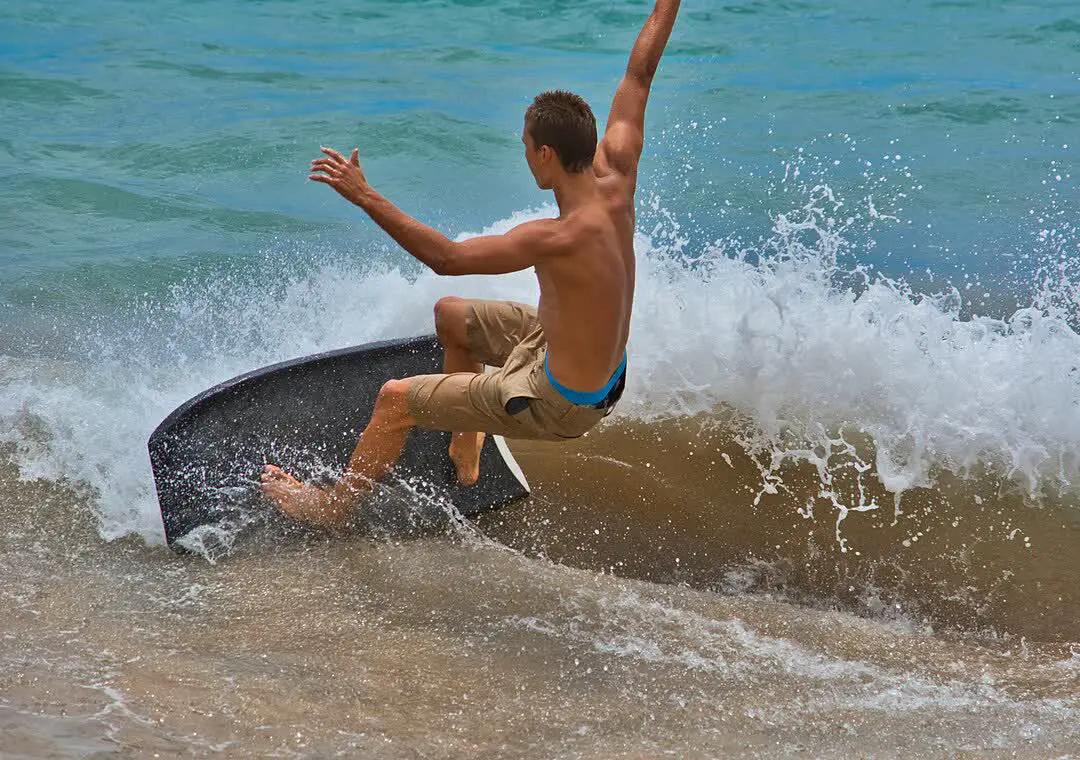
A small black finless board in shorebreak. Illustrative photo, not the Catch Surf Beater.

Catch Surf

Catch Surf 54" Beater Original Soft Surfboard, Finless, Black

The 54-inch Beater is a finless soft board for small shorebreak. It is not an 8-foot learner log.

Worth knowing

  • Soft
  • Short enough to toss in a car
  • Finless, which is a different feel

Limits

  • Too small for most adults on day one
  • Finless is not a thruster foamie
  • Photo is a different foam board

Verdict. Fun in tiny shorebreak if you already surf. For a first board, start longer.

Wikimedia Commons / Bodyboard Surfing (49992694488).jpg

View on Amazon
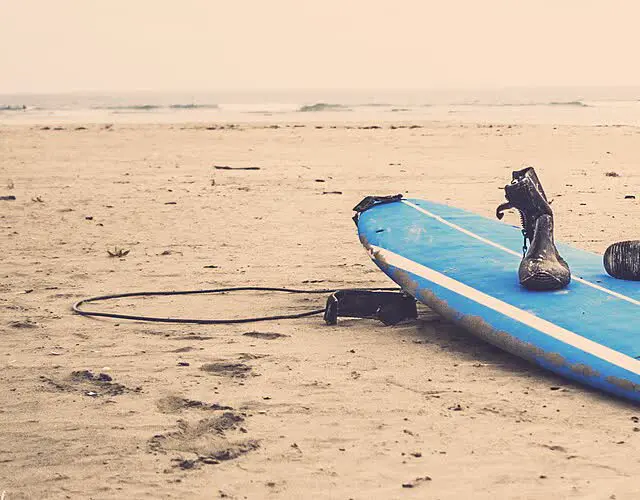
A long blue surfboard lying on the sand. Illustrative photo, not the Wavestorm listing image.

Wavestorm

Wavestorm Classic Soft Top Foam 8ft Surfboard

An 8-foot soft-top is the board most adults should learn on: long enough to paddle, soft enough to fall on.

Worth knowing

  • 8 ft length
  • Soft deck
  • The usual kit includes fins

Limits

  • You will outgrow the performance
  • Hard to duck-dive
  • Colorways change by year

Verdict. A sensible first board for an adult in small waves. Check the volume calculator before you size down.

Wikimedia Commons / Abandoned surfboard (Unsplash).jpg

View on Amazon
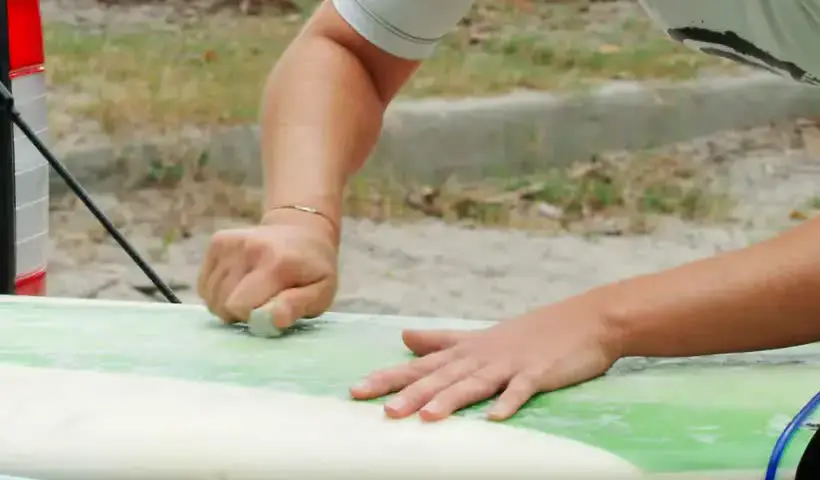
Hands rubbing a bar of wax onto a surfboard. Illustrative photo, not the Sexwax listing image.

Mr Zogs Sex Wax

Mr Zogs Original Sexwax, Tropical, Coconut

Tropical wax stays tacky in warm water. Cold-water wax goes glassy in the tropics, and tropical wax smears in cold water.

Worth knowing

  • Warm-water formula
  • Easy to find

Limits

  • Wrong bar for cold water
  • You still want a base coat underneath
  • Photo shows waxing a board, not this bar

Verdict. Buy the temperature that matches the water. This bar is for tropical water.

Wikimedia Commons / Waxing a surfboard.jpg

View on Amazon
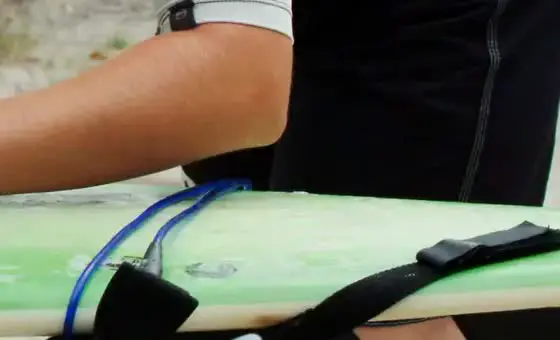
A plain blue surf-leash cord and black cuff, with no brand name visible.

Dakine

Dakine John John Florence Kainui Surf Leash (6 ft listing)

A 6-foot leash is the usual match for a shortboard. The cuff and the swivel are the parts you notice every session.

Worth knowing

  • 6 ft length for shortboards
  • Dakine cuff and rail saver

Limits

  • Too short for a longboard or a step-up
  • This ASIN is the 6 ft listing, not the 7 or 8 ft versions

Verdict. A normal shortboard leash. Ride something 8 feet or longer and get a longer leash instead.

Wikimedia Commons / Waxing a surfboard.jpg

View on Amazon
A blue and white rash guard on the beach, with no brand name visible.

O'Neill

O'Neill Men's Basic Skins Short Sleeve Rashguard, UPF 50+

A short-sleeve rash guard is the warm-water layer: sun on the shoulders, and less wax rash on the chest.

Worth knowing

  • UPF 50+ as named on the listing
  • Short sleeve

Limits

  • Not a wetsuit
  • Men's cut
  • Size still matters

Verdict. The usual warm-water top. It does not replace a wetsuit when the water is cold.

Wikimedia Commons / Both gender surfers with rash vest

View on Amazon
A surfer in a full black wetsuit stretching on the beach.

O'Neill

O'Neill Hyperfreak 3/2mm Chest-Zip Full Wetsuit, Men's

A 3/2 mm fullsuit is the usual thickness for cool water, not icy water. A chest zip is warmer and slower to put on than a back zip.

Worth knowing

  • 3/2 mm for cool water
  • Chest zip
  • Men's cut

Limits

  • Sizes are separate listings
  • Too warm for the tropics
  • Too thin for a true cold-water winter

Verdict. A cool-water fullsuit if you already know your O'Neill size. One listing is not a universal fit.

Wikimedia Commons / Man in wetsuit

View on Amazon

Ready to find your first board?

Our Board Finder will help you choose the right board for your current skill level and local conditions.