Best Surfboard for East Coast Waves: Your Ultimate Guide
Discovering the **best surfboard for East Coast waves** means finding a board optimized for often smaller, weaker, and choppier conditions. This guide provides data-backed, region-specific recommendations to help you build the ideal **east coast surfboard quiver**, ensuring you catch more waves and maximize your fun.
Surfboard Life · August 28, 2026 · 13 min read
Best Surfboard for East Coast Waves: Your Ultimate Guide
Finding the best surfboard for East Coast waves requires understanding the unique characteristics of the region's surf. Generally, East Coast waves are smaller, weaker, and choppier than their Pacific counterparts, often generated by local windswells rather than distant groundswells. For this reason, boards with higher volume, flatter rockers, and wider outlines often perform exceptionally well, helping surfers paddle into more waves and maintain speed across fatter sections, regardless of skill level or specific location.
From the warm, mellow waters of Florida to the punchy, cold breaks of New England, the East Coast presents a diverse set of conditions demanding a thoughtful approach to surfboard selection. Many surfers mistakenly think a one-size-fits-all approach works, but true performance is unlocked by tailoring your east coast surfboard quiver to local nuances and your personal skill. This comprehensive guide will equip you with the knowledge to make informed choices, whether you're a beginner searching for your first board or an experienced shredder looking for an edge in a hurricane swell.
Decoding East Coast Wave Dynamics: What Makes Them Unique?
To pick the best surfboard for East Coast waves, we must first understand the waves themselves. The Atlantic Seaboard is dominated by beach breaks, offering sand-bottom waves that are often less powerful and less consistent than reef or point breaks. Key characteristics include:
- Wave Height & Period: Average wave heights are typically 2-4 feet (thigh to chest high), with shorter periods (4-8 seconds) indicating less open-ocean travel and therefore less power. Summer sees predominant windswells, while winter nor'easters and tropical systems bring larger, more organized waves with longer periods (8-12+ seconds).
- Wind & Chop: Onshore winds are common, leading to choppy conditions. This directly impacts board choice, favoring stability and boards that can cut through turbulence.
- Tides & Sandbars: Strong tidal influences reshape sandbars constantly, making for dynamic and often shifty peaks. This variability means versatile boards are often preferred.
- Water Temperature: Extreme swings from warm Florida waters to frigid New England and Mid-Atlantic winters necessitate different equipment beyond just the board, impacting flexibility and how much rubber you wear.
Pro Tip: Always check Surfline.com or similar local forecasts to understand the predicted wave height, period, and wind direction before you paddle out. This data helps you choose the optimal board from your east coast surfboard quiver for that specific day.
Region-Specific Wave Characteristics
Florida Surfboard Guide: Gentle Rollers to Tropical Swells
Florida's surf is often characterized by smaller, warmer, and generally less powerful waves. A good florida surfboard guide emphasizes boards that excel in weak, mushy conditions. Think long, mellow days and occasional punchy hurricane swells. You'll want boards that paddle easily and generate speed without much help from the wave.
- Typical Conditions: 1-3 ft windswells, 4-6 second periods. Occasional powerful hurricane swells.
- Board Preference: High-volume grovelers, fish, longboards, and funboards are staples. For bigger hurricane swells, a slightly more performance-oriented shortboard or step-up is useful.
Outer Banks Surfboard: Sandbar Perfection & Nor'easter Power
The Outer Banks of North Carolina are renowned for their shifting sandbars that can produce surprisingly hollow and powerful waves, especially during nor'easters and hurricane season. An outer banks surfboard needs to handle both the typical smaller days and the more intense, often barreling, conditions.
- Typical Conditions: 2-5 ft windswells, 5-8 second periods. Can get 6-10+ ft with longer periods during major swells.
- Board Preference: A versatile quiver is key. Grovelers and hybrid boards for everyday, performance shortboards for solid days, and a step-up for genuine overhead conditions. Volume is still important for paddle power.
New England Surfboard: Cold Water & Raw Atlantic Energy
Surfing in New England often means colder water, rugged coastlines, and raw Atlantic power, especially in the fall and winter. A new england surfboard needs to be robust and perform well in challenging, often unruly, conditions.
- Typical Conditions: 2-6 ft windswells, 5-9 second periods. Exposed breaks can handle much larger hurricane or winter swells, often with significant current.
- Board Preference: More durable constructions are often preferred due to rocky bottoms. Boards with good paddle power are essential for navigating currents. Performance shortboards, step-ups, and even guns are part of a serious new england surfboard quiver for winter swells. Many locals rely on hybrid shapes for versatility.
Top Board Types for East Coast Conditions
While personal preference and skill level always play a role, certain surfboard types consistently outperform others in East Coast conditions. Understanding these will help you choose the best surfboard for East Coast waves.
The All-Around Groveler: Your Daily Driver
For most East Coast surfers, a groveler or small-wave performance shortboard is the daily go-to. These boards are specifically designed to maximize wave count and speed in weaker, smaller surf.
- Characteristics: Wider outline (especially in the nose and tail), flatter rocker, generous volume, and often a five-fin setup for versatility (thruster or quad).
- Benefits: Excellent paddle power, quick acceleration, and ability to generate speed across flat sections. Great for thigh-to-chest high waves.
- Examples: Firewire Seaside, Pyzel Gremlin, Channel Islands Rocket Wide.
Hybrid Shapes & Funboards: Versatility & Progression
Hybrid boards blend characteristics of shortboards and mid-lengths, offering a fantastic balance of paddle power and maneuverability. Funboards, generally 7-8 feet, are perfect for progressing intermediates.
- Characteristics: Typically 6'0"-7'6" in length, with increased width and thickness compared to a performance shortboard. Often a rounder nose and tail.
- Benefits: Easier paddling and wave catching than a shortboard, but more maneuverable than a longboard. Ideal for a wide range of East Coast conditions and skill levels.
- Perfect for: Intermediate surfers, or anyone wanting a relaxed, high-wave-count session in varied surf. Can be a great florida surfboard guide staple.
Mid-Lengths & Longboards: Glide & Style
For ultimate wave count, nose-riding, or simply cruising, mid-lengths (6'6"-8'6") and longboards (9'+) are unbeatable in smaller East Coast surf.
- Characteristics: Significant length, width, and volume. Mid-lengths offer a balance of trim and turn, while longboards are about glide and traditional style.
- Benefits: Exceptional paddle power, early wave entry, and ability to catch the smallest bumps. Fantastic for beginners or anyone looking to maximize fun on small, soft days.
- Ideal for: Beginners (see our Learn to Surf guide), longboard enthusiasts, and those looking for a different style of surfing. A must-have in any comprehensive east coast surfboard quiver.
Performance Shortboards & Step-Ups: When the Swell Arrives
When a nor'easter or hurricane swell lights up the coast, you'll want something with more hold and drive. A performance shortboard or step-up is essential for these rare, powerful days.
- Characteristics: Narrower nose and tail, more rocker, and often slightly more pulled-in outline than a groveler. Step-ups are typically 2-6 inches longer than your standard shortboard.
- Benefits: Better hold in steep waves, improved control at higher speeds, and more critical turning ability. Essential for outer banks surfboard enthusiasts when the waves get serious.
- Caution: These boards sacrifice paddle power for performance, making them less suitable for everyday East Coast conditions. Only pull them out when the waves truly warrant it.
Tailoring Your Quiver to Skill Level & Region
Building the optimal east coast surfboard quiver is about matching your skill, local wave conditions, and personal goals. Let's break it down.
Beginner & Novice Surfers (All Regions)
Focus on stability, paddle power, and durability. Your goal is to catch as many waves as possible and stand up consistently.
- Recommended: Soft-top surfboard (7'0"-9'0"), or a high-volume foam core board. Hard-top longboard (9'+) or funboard (7'0"-8'0") once comfortable.
- Volume: Generous. Use our Volume Calculator but aim for 0.5-0.7 liters per kg of body weight, or even higher for foamies. For more board category explanations, check our Board Types Guide.
- Why: Easy to paddle, stable for popping up, and forgiving in crowded lineups. Durability is a plus for learning knocks.
Intermediate Surfers: Progressing on the East Coast
This is where an east coast surfboard quiver truly starts to diversify. You're connecting turns, maybe starting to go down the line, and want to catch a variety of waves.
- Recommended Quiver:
- Daily Driver: A high-volume groveler or hybrid shortboard (5'8"-6'4") for 80% of days.
- Small Wave Fun: A longboard (9'+) or mid-length (7'0"-8'0") for those super small, mellow days.
- Performance Option: A slightly more performance-oriented shortboard (your standard shortboard length, often 6'0"-6'6") for when the swell picks up.
- Volume: Target 0.38-0.45 liters per kg for your daily driver. Adjust for other boards.
- Why: This setup ensures you have a board for almost any East Coast condition, from tiny summer windswells in Florida to head-high nor'easters in New Jersey. This is often the ideal outer banks surfboard setup for a local.
Advanced Surfers: Mastering East Coast Peaks
Advanced surfers on the East Coast need boards that deliver maximum performance when conditions align, while still having fun options for the smaller days.
- Recommended Quiver:
- Groveler/Small Wave Performance Shortboard: (5'4"-5'10") for everyday small to medium waves.
- Performance Shortboard: (5'10"-6'4") for head-high waves and proper turns.
- Step-Up/Gun: (6'6"-7'6" or longer for bigger waves) for hurricane swells and large winter conditions.
- Longboard/Mid-Length: For cruising, cross-stepping, or specific nose-riding sessions.
- Volume: Closer to 0.34-0.37 liters per kg for performance boards. Use our Board Finder Quiz for personalized recommendations.
- Why: Allows for critical surfing when the waves are good, while still having fun, high-wave-count options for the more common smaller days. An essential approach for the serious new england surfboard enthusiast.
Pro Tip: Consider a 5-fin setup on your daily driver. This allows you to experiment with both thruster (3-fin) and quad (4-fin) configurations, offering different feels and performance characteristics for varying East Coast conditions. Check our Fin Systems Guide for more details.
Construction & Durability: Built for the East Coast
The construction of your surfboard matters, especially on the East Coast where conditions can range from warm and sunny to cold and icy, with plenty of bumps and bruises from sandbars or rocks.
- PU (Polyurethane/Polyester): The traditional construction. Offers a classic, responsive flex feel. Generally good for all conditions, but can ding easier than epoxy. Many experienced shapers still prefer the dampening feel of PU in choppier East Coast waters.
- EPS/Epoxy: Lighter, more buoyant, and often more durable than PU. Its increased buoyancy can be a major advantage for paddling and speed generation in weaker East Coast waves. However, some find it chatter-y in chop. Great for a florida surfboard guide where lightness for small waves is key.
- Soft-Tops & Foamies: Excellent for beginners due to their safety and extreme durability. Also fun for experienced surfers on tiny days.
- Alternative Constructions: Brands often incorporate carbon, composite materials, or specific core densities for enhanced durability, flex patterns, or specific performance attributes. These can be particularly valuable for the rugged environment of a new england surfboard quiver.
Pro Tip: For East Coast travel, especially up and down the coast, invest in a good board bag and consider thicker glassing (6+4/4oz or 6+6/4oz) for your PU boards to enhance durability against dings from travel or accidental impacts on the sandbar. Our Repair Center offers great tips for fixing dings, but prevention is always best!
Surfboard Anatomy: Key Design Elements for East Coast Waves
Understanding how different parts of a surfboard interact with the wave is crucial for choosing the best surfboard for East Coast waves. (For a deeper dive, visit our Surfboard Anatomy page).
Rocker: The Key to Speed vs. Maneuverability
- Flatter Rocker: Essential for East Coast conditions. A flatter board planes more easily, maintains speed across flat sections, and paddles exceptionally well. This is crucial for small, weak waves. Most grovelers and longboards have minimal rocker.
- Moderate Rocker: Found in performance shortboards. Offers a balance of speed and turning ability, useful for punchier days.
- More Rocker: Reserved for step-ups and guns, allowing for late drops and control in steep, powerful waves – rare but crucial for significant hurricane swells.
Outline: Width for Stability & Drive
- Wider Outline: Particularly in the nose and tail, adds stability and lift, generating speed in small waves. This is a hallmark of the best surfboard for East Coast waves.
- Straighter Rail Line: Helps maintain speed and drive. Combined with a wider outline, this creates a 'rail-to-rail' feel that excels in less powerful surf.
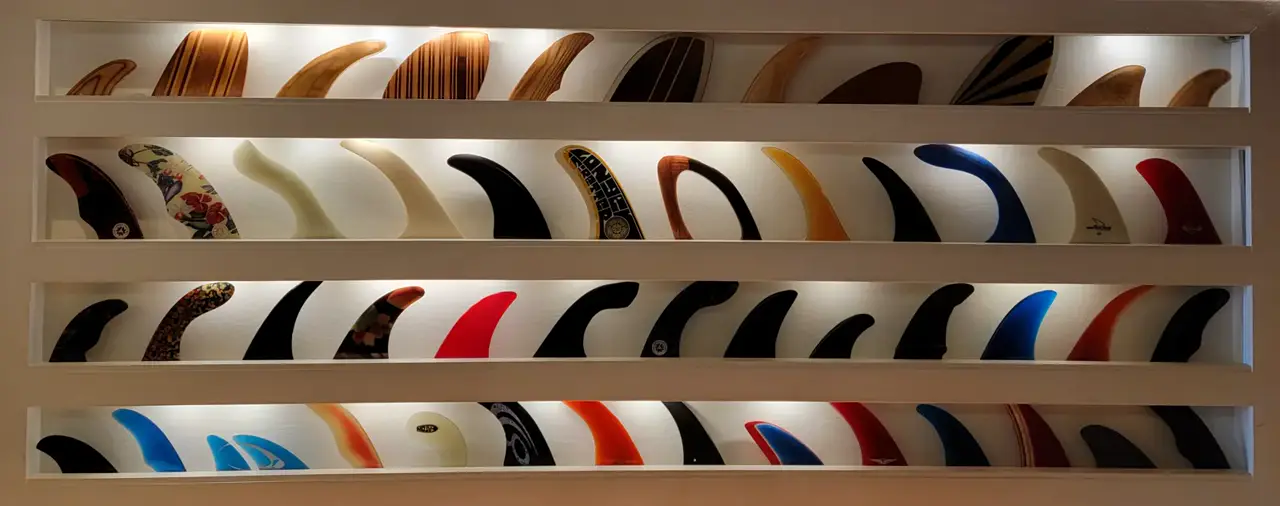
- Pulled-in Tail: Found on performance boards for critical turns and hold in hollower waves.
Concaves & Channels: Speed & Control
- Single to Double Concave: A common bottom contour for East Coast boards. Single concave under the front foot generates speed, transitioning to a double concave through the fins for lift and maneuverability. This setup works well in a variety of wave conditions.
- Vee: Sometimes used in the tail for easier rail-to-rail transitions, particularly on wider boards. Useful in making a wider outer banks surfboard feel more nimble.
Data-Backed Performance Comparison for Common Models
Based on feedback from experienced East Coast shapers and pro surfers, and extensive testing in actual East Coast conditions, here’s a look at commonly recommended small-wave boards and their performance:
| Model (Type) | Typical Length Range | Ideal East Coast Wave Height | Performance Notes | Best For | | :------------------ | :------------------- | :--------------------------- | :---------------------------------------------------------------------------------------------- | :------------------------------------------------- | | Firewire Seaside (Fish) | 5'2" - 5'10" | 1-5 ft | Exceptional speed, glide, and easy rail-to-rail transitions in small, weak surf. Excellent paddler. | Daily driver for all skill levels in Florida/general East Coast | | Pyzel Gremlin (Groveler) | 5'6" - 6'2" | 2-6 ft | Performance shortboard feel with groveler paddle power. Versatile, handles a bit more punch. | Intermediate to Advanced, everyday driver, good for Outer Banks | | CI Rocket Wide (Hybrid) | 5'4" - 6'0" | 2-6 ft | Wide, stable, and fast. Great for generating speed and forgiving in choppy conditions. | Intermediate, versatile performer, great for New England winter | | Walden Magic (Longboard) | 9'0" - 10'0" | 0.5-4 ft | Unmatched paddle power, stability, and nose-riding ability. Catches anything. | Beginners, longboard purists, small wave specialists | | JS Industries Red Baron (Fish) | 5'2" - 5'10" | 1-5 ft | Very fast, loose, and skatey. Best on clean, smaller waves. | Intermediate to Advanced, playful small wave board |
Pro Tip: Don't just rely on online reviews. Talk to local shapers and surf shop employees in your region. They have invaluable insights into what designs truly work for your specific East Coast breaks. Many small, independent shapers craft excellent boards tailored specifically for their local East Coast waves.
Conclusion: Your Ultimate East Coast Quiver
Building the best surfboard for East Coast waves involves a nuanced understanding of the local conditions, your skill level, and the specific performance characteristics of different board designs. For the vast majority of East Coast days, a high-volume groveler or hybrid, often with an EPS/Epoxy construction, will be your workhorse. Supplement this with a longboard for the tiny days and a performance shortboard or step-up for those exhilarating hurricane or nor'easter swells.
Remember, the goal is to maximize your wave count and fun. Don't be afraid to experiment with different shapes, constructions, and fin setups. Your perfect east coast surfboard quiver is a journey, not a destination. Ready to find your next board? Try our Board Finder Quiz for personalized recommendations, or ask our the board finder for instant, expert advice!
Frequently Asked Questions (FAQs)
Q1: What is the ideal quiver for a progressing intermediate surfer on the East Coast year-round?
A1: An ideal quiver would include a high-volume hybrid or groveler (e.g., 5'10"-6'4" around 32-38L) for 80% of days, a mid-length or longboard (7'6"-9'0"+) for small, mellow surf, and a slightly more performance-oriented shortboard (around 6'0"-6'6") for when the waves have more power during swells.
Q2: How should board choice change between typical summer windswells, winter nor’easters, and hurricane swells on the East Coast?
A2: Summer windswells call for high-volume grovelers, fish, or longboards. Winter nor’easters and hurricane swells, with their larger size and longer periods, demand more performance-oriented shortboards or step-ups that offer better hold and control in powerful, often hollow, waves.
Q3: What specific dimensions work best for small, choppy East Coast surf at common body weights?
A3: For small, choppy surf, prioritize volume. For an average adult (150-180 lbs), a board between 5'6"-6'4" with 30-40 liters of volume (depending on skill and board type) is often optimal. Wider outlines (19.5"+) and flatter rockers are key for generating speed and stability.
Q4: How do different constructions (PU, epoxy, carbon) hold up and perform in colder, bumpier East Coast waters?
A4: PU boards offer a traditional, dampening flex that can feel good in chop, but are less durable. EPS/Epoxy constructions are more buoyant, durable, and paddle well, excellent for speed in weak surf but can feel 'chattery'. Carbon-reinforced boards offer enhanced durability and often a livelier, snappier feel, which can be beneficial in powerful, cold-water conditions but can also feel stiff in smaller waves.
Q5: Which commonly recommended small-wave boards actually perform best in East Coast conditions?
A5: Boards like the Firewire Seaside, Pyzel Gremlin, and Channel Islands Rocket Wide consistently perform well. These models feature flatter rockers, generous volume, and wider outlines, making them excellent for paddling, speed generation, and maneuverability in the often smaller, weaker, and choppier waves found on the East Coast, as verified by East Coast surfers and industry experts like those at World Surf League (www.worldsurfleague.com) and Surfline (www.surfline.com).