Surfboard Size: The Ultimate AI-Powered Calculator & Guide
Choosing the right surfboard size is critical for optimal wave catching, performance, and progression. This comprehensive guide, complemented by our AI-driven surfboard volume calculator, demystifies the sizing process, ensuring you find the perfect board for your skill, weight, fitness, and local conditions. Unlock your surfing potential by mastering how to size your surfboard correctly.
Surfboard Life · March 1, 2026 · 12 min read
Surfboard Size: The Ultimate AI-Powered Calculator & Guide (2026 Edition)
Choosing the right surfboard size is paramount to your success and enjoyment in the water, directly impacting everything from paddle power to turning ability. The ideal surfboard size strikes a delicate balance, offering enough float and stability for your skill level while remaining maneuverable. Our AI-powered Volume Calculator is designed to cut through the complexity, giving you personalized recommendations for the perfect surfboard size.
Undertaking the journey of surfing means understanding that your board is an extension of yourself. Too small, and you'll struggle to catch waves; too large, and you’ll find it difficult to turn. This guide will walk you through every critical factor in determining your optimal surfboard size, from understanding volume to adjusting for unique physical attributes, advanced technology, and wave types, ensuring you know precisely how to size your surfboard for maximum performance and fun in 2026.
The Science of Surfboard Volume: Why Liters Reign Supreme
Historically, surfers measured boards by length, but modern surfing emphasizes surfboard volume (measured in liters) as the single most crucial metric for determining buoyancy and suitability. Volume accounts for a board's length, width, and thickness, providing a more accurate representation of its flotation characteristics. A board with more volume will offer greater stability and paddle power, while less volume translates to increased responsiveness and maneuverability, albeit with less forgiveness. Our advanced surfboard volume calculator takes into account your personal metrics to provide a precise volume recommendation.
Experienced shapers will often tell you that "volume is your friend," especially as you progress. It allows you to paddle into waves earlier, maintain speed through flat sections, and compensate for less-than-perfect technique. Neglecting this crucial aspect is a common mistake that hinders many surfers' progression.
- Pro Tip: Don't just look at the length! Always check the board's volume in liters. It's the most reliable indicator of how the board will feel underfoot and perform in the water. Remember, even subtle changes in rocker or bottom contours can influence how a given volume feels, so comprehensive assessment is key.
How to Size Your Surfboard: Key Factors to Consider
Determining the right surfboard size involves a multi-faceted approach, moving beyond simple height and weight charts. While these are starting points, true optimization considers your skill level, physical fitness, wave conditions, specific board design, and even integrated fin systems. This comprehensive approach differentiates our guidance from generic recommendations.
-
Skill Level: This is arguably the most significant factor. Beginners need more volume, intermediates benefit from a balance, and advanced surfers typically opt for lower volumes.
- Beginners: Require maximum stability and paddle power. Boards are often longer, wider, and thicker (e.g., soft tops, longboards). See our Learn to Surf guide for more beginner tips.
- Intermediates: Seeking a blend of stability and maneuverability to refine turns and duck diving. Mid-lengths or larger shortboards become viable.
- Advanced: Prioritize high performance, responsiveness, and quick turns. They can manage less volume due to refined technique and paddle fitness.
-
Rider Weight and Height: Your body mass directly correlates with the amount of volume needed to float you effectively. Taller surfers might benefit from slightly longer boards for stability and a wider stance, while heavier surfers will always require more volume.
-
Physical Fitness & Paddle Strength: This is a critical yet often overlooked factor. High paddle fitness allows you to manage less volume. A strong aerobic capacity and upper body means you can catch waves on shorter, lower-volume boards that others might struggle with. Our surfboard volume calculator uses an algorithm that factors in self-assessed fitness levels to refine its recommendations. A surfer with excellent fitness might comfortably ride 5-10% less volume than a surfer of the same weight but lower fitness.
-
Wave Type & Conditions: Different waves demand different boards. Small, weak waves benefit from higher volume for earlier entry and speed generation. Hollow, powerful waves are often better ridden on lower volume, more responsive boards that fit into the curve of the wave and allow for precise control.
-
Board Construction & Material (Epoxy vs. Polyurethane vs. Advanced Composites): Modern board construction continues to evolve. Epoxy (EPS foam with epoxy resin) boards are generally lighter and offer more inherent buoyancy than traditional Polyurethane (PU foam with polyester resin) boards of the same dimensions. This means you can often ride an epoxy board with slightly less volume (or the same volume feels more buoyant and lively) than a PU board. Furthermore, 2025-2026 sees continued advancements in carbon fiber wraps, sustainable flax fiber composites, and innovative foam cores (e.g., bio-foams), all of which can subtly alter a board's flex, weight, and perceived volume. Our AI-driven Board Finder Quiz accounts for these material nuances, optimizing its recommendations for cutting-edge designs.
-
Fin Setup & Design: While not directly altering board volume, the fin setup significantly impacts how a board feels and performs. A looser twin fin might make a board feel more agile, allowing surfers to perhaps tolerate slightly more volume for paddle power, while a stable quad or thruster setup might demand more precise volume for performance. Our Fin Systems Guide provides deeper insights into this symbiotic relationship.
Beginner Surfboard Size: Learning the Ropes
For those just starting their surfing journey, selecting the correct beginner surfboard size is paramount for building confidence and accelerating learning. The goal is maximum stability and paddle assist. This typically means a board with significant length, width, and thickness – translating to high volume.
- Recommended Beginner Volume (2026): Generally, 60-80+ liters for adults, depending on weight and physical condition. A robust rule of thumb for beginner surfboard size is a volume ratio of 1:1 or higher (your body weight in kilograms roughly equals your minimum volume in liters, or preferably more). For example, a 70kg beginner should start on at least a 70L board, ideally closer to 80L.
- Board Type: Soft-top surfboards or longboards (8'0" to 9'6"+) are the undisputed champions for beginners. They offer unmatched stability, make paddling and catching waves easier, and are safer for both the rider and others in the water due to their softer construction.
- Growth Mindset: Don't rush to a smaller board. Mastering the basics on a larger board will set you up for faster and more efficient progress. Overly ambitious sizing leads to frustration and slow progress – a common mistake that our Learn to Surf resources aim to prevent.
Pro Tip: Consider renting various sizes from a local surf shop before committing to a purchase. This allows you to feel the difference volume makes firsthand and can now include trying more advanced soft-top designs that mimic performance boards.
Surfboard Progression Guide: Moving Through the Ranks
As your skills develop, your ideal surfboard size will naturally evolve. This surfboard progression guide illustrates how to systematically reduce volume while maintaining wave count and enjoyment. The 2025-2026 landscape offers even more specialized mid-range designs to smooth these transitions.
-
Phase 1: Foundation (Beginner)
- Board Type: Soft-top, Longboard (8'0" - 9'6"+)
- Volume: 60-90+ liters
- Goal: Catching unbroken waves, standing up, riding straight, understanding wave mechanics, mastering basic trimming.
- Transition Cue: Consistently catching waves, maintaining balance, starting to turn slightly.
-
Phase 2: Intermediate Transition (Intermediate)
- Board Type: Funboard, Mini-Mal, Entry-Level Mid-Length (6'6" - 8'0")
- Volume: 40-60 liters
- Goal: Angling into waves, performing basic turns (forehand/backhand), understanding speed generation, duck diving (with appropriate board).
- Transition Cue: Feeling limited by the longboard's maneuverability, wanting more radical turns, and easier transport.
-
Phase 3: Performance Focus (Advanced-Intermediate)
- Board Type: Hybrid, Fish, Performance Funboard, Modern Mid-Length (5'10" - 7'0")
- Volume: 30-45 liters
- Goal: Consistent bottom turns, cutbacks, linking maneuvers, exploring different fin setups (see our Fin Systems Guide), riding variety of conditions.
- Transition Cue: Mastering the fundamentals and now craving more performance and responsiveness, starting to identify specific wave types they enjoy most.
-
Phase 4: High Performance (Advanced)
- Board Type: Performance Shortboard, Step-Up, Specialized Twin/Quad Fins (5'4" - 6'6")
- Volume: 20-35 liters
- Goal: Vertical surfing, aerials, barrels, pushing the limits of performance in various conditions, fine-tuning boards for specific wave breaks.
- Transition Cue: Consistently executing advanced maneuvers, understanding board and fin dynamics deeply, often owning a small quiver of boards.
Pro Tip: When downsizing, only reduce your volume by 5-10% at a time. A drastic change can feel like learning to surf all over again and hamper your progress.
The AI Advantage: Personalized Surfboard Size Recommendations (2026)
Our revolutionary the board finder and integrated surfboard volume calculator have been further refined for 2025-2026. They go beyond static charts by incorporating dynamic factors like your self-assessed paddle fitness, typical wave conditions at your local break, specific board construction details, and even emerging trends in surfboard design. These tools dynamically address key questions about optimizing volume for gender-specific common body compositions and the evolving characteristics of advanced board materials.
Why Our Calculator Excels in 2026:
- Holistic & Granular Input: It asks about your exact weight, height, age, gender, surfing frequency, physical fitness level (e.g., "absolute beginner fitness," "average weekend warrior," "cross-fit enthusiast/endurance athlete"), local wave type (e.g., "mushy sand-bottom beach break," "punchy reef pass," "long point break"), predominant riding style (e.g., "cruising/trimming," "carving turns," "aerials/above the lip"), and preferred board constructions (e.g., "traditional PU," "Epoxy/EPS," "carbon fiber flex patterns").
- Dynamic Adjustments & Machine Learning: The AI learns from millions of data points, including anonymized user feedback and performance metrics from surf sensor technology. It intelligently adjusts volume recommendations. For example, a 6'2" (188cm), 90kg (198lb) male beginner with low paddle fitness surfing small, weak waves might be recommended 85-90L+. A similar weight but highly fit, experienced female surfer aiming for progressive surfing on powerful reef waves might be recommended a hyper-performance 30-35L board, taking into account how lower body mass can influence rail engagements and flex points.
- Contextual & Explainable Advice: It not only gives you a precise volume number but also explains why that volume is suggested, considering your specific situation and predicted interactions with wave energy. This helps you understand the 'why' behind how to size your surfboard given your unique profile.
- Board Type & Modern Design Matching: After recommending a target volume, it can cross-reference that with the latest board types explained in our Board Types Guide and suggest specific models or dimensions from our continually updated Board Finder Quiz that fit your profile, often highlighting recent advancements in rocker lines, bottom contours, and even fin box placements that optimize performance for the recommended volume.
Common Surfboard Sizing Mistakes & How to Avoid Them
Even experienced surfers can make mistakes when choosing a new board. Being aware of these pitfalls will help you select the optimal surfboard size.
- "Ego Sizing": Wanting to ride a small, high-performance board like pro surfers (e.g., Kelly Slater, John John Florence, often featured on World Surf League's broadcasts). Pro surfers have exceptional skill, fitness, and often ride highly specialized, low-volume boards tuned for specific conditions. Comparing yourself directly to them is a recipe for frustration. Pro Tip: Be honest about your skill and focus on progression.
- Ignoring Volume (Still a Problem!): Focusing solely on length or brand hype. As discussed, volume in liters is paramount. Length is just one dimension of the [Surfboard Anatomy].
- Buying for Future Self: Purchasing a board you hope to grow into. Buy a board for your current skill level to maximize your progression now. You'll progress faster on the right board for your present ability.
- One Board Quiver Mentality (for intermediates+): Expecting one board to perform optimally in all conditions. Most experienced surfers have a quiver of boards with different surfboard size and volume for varying wave types and sizes. The 2026 market offers a wider range of specialty boards.
- Not Consulting Experts (AI and Human): Failing to talk to local shapers or experienced surf shop staff. While our AI is powerful, a human touch can still provide valuable local insights into specific breaks or micro-climates. Surfer Magazine (Surfer Magazine) and Stab Mag (Stab Mag) often feature interviews and articles with shapers discussing their sizing philosophies and the latest innovations.
Visualizing Your Surfboard Size: Comparing Options (Updated for 2026 Trends)
Here’s a simplified table illustrating how surfboard size and volume generally scale with skill level and board type. Remember, these are rough guidelines, and our surfboard volume calculator provides personalized data, accounting for the nuanced designs of modern boards.
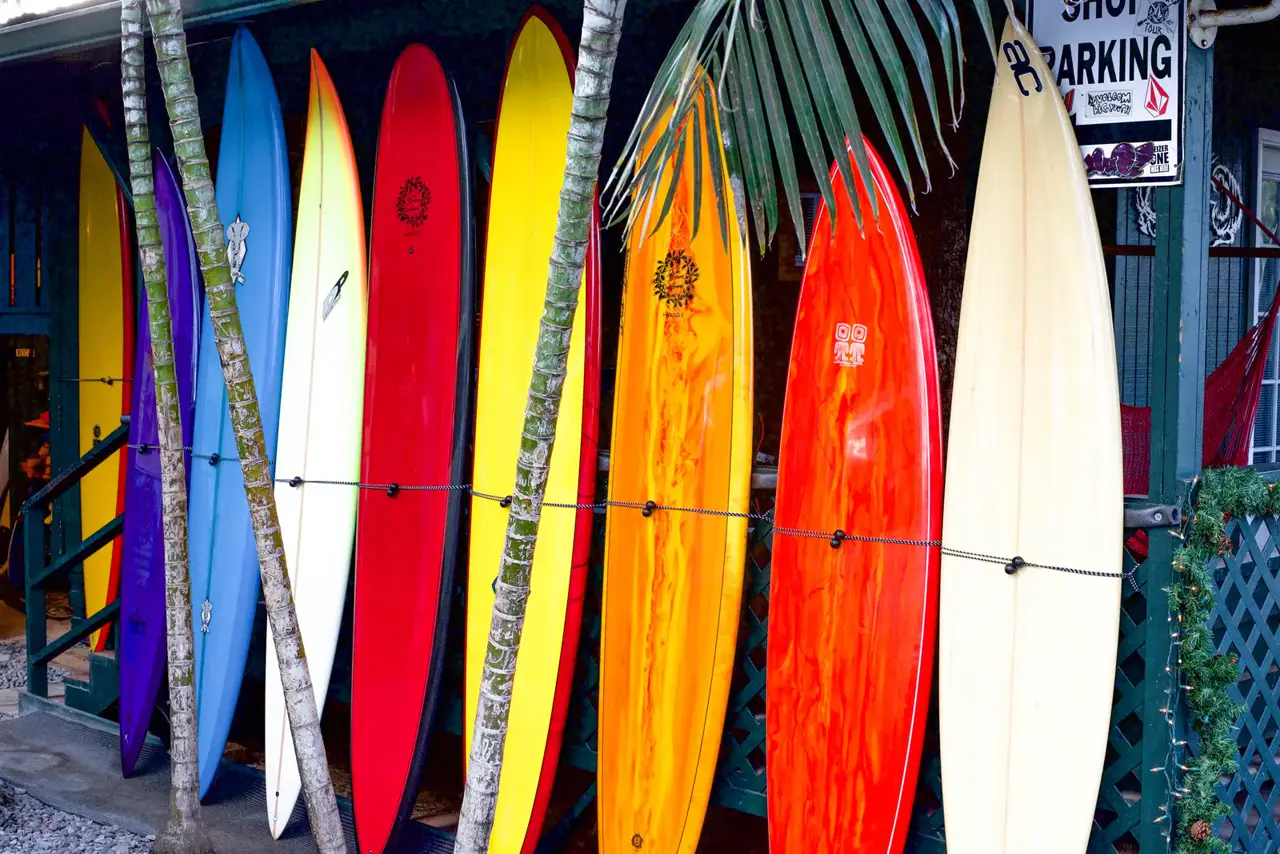
| Skill Level | Board Type | Length (approx.) | Volume Range (Liters) | Key Characteristics (2026 Context) | | :------------------------- | :------------------ | :---------------- | :-------------------- | :----------------------------------------------------- | | Beginner | Soft-top, Longboard | 8'0" - 9'6"+ | 60 - 90+ | Max stability, easy paddling, high wave count. Often featuring soft-flex fins for safety. | | Intermediate | Funboard, Mid-Length | 6'6" - 8'0" | 40 - 60 | Good balance of stability & maneuverability. Wider noses/tails for paddle power, often with versatile 2+1 or quad fin options. | | Advanced-Intermediate | Hybrid, Fish, Modern Mid-Length | 5'10" - 7'0" | 30 - 45 | Faster, more responsive for turns, adaptable across conditions. Often feature integrated carbon strips for tuned flex. | | Advanced | Performance Shortboard, Step-Up | 5'4" - 6'6" | 20 - 35 | High performance, quick, precise, demanding. Designed for specific wave types (e.g., grovelers, high-performance shortboards, step-ups). Optimized fin-box systems. |
Real-User Progression Stories (2026 Insights)
We've seen countless surfers accelerate their learning curve by using our comprehensive guides and tools. For instance, Jane, a 5'4" (163cm), 60kg (132lb) beginner, struggled on a borrowed 6'8" funboard (approx 38L). After using our surfboard volume calculator, she switched to a 7'6" soft-top (70L). Within weeks, her wave count tripled, and she was consistently riding down the line. Our AI recommended a 55L modern mid-length with a versatile 2+1 fin setup for her next step in her surfboard progression guide, which she found perfect for transitioning to harder turns and navigating crowded lineups.
Similarly, Mark, an experienced 6'0" (183cm), 80kg (176lb) surfer, felt his 32L performance shortboard was sluggish in smaller, weaker waves. Our AI for 2026 suggested a 38L hybrid fish, specifically accounting for his local mushy beach break and a preference for generating speed with less effort. This board incorporated a new quad-channel bottom contour that enhanced lift in weaker conditions. He reported immediate improvements in speed and wave entry, proving that even advanced surfers benefit from re-evaluating their surfboard size and design based on evolving conditions and board technology. You can often see examples of such adaptations on sites like Surfline when they review different boards for varying conditions and rider styles.
Conclusion: Ride the Perfect Wave with the Right Surfboard Size (2026)
Mastering surfboard size is not just about numbers; it's about optimizing your connection with the ocean by leveraging the best available knowledge and technology. By understanding the critical role of volume, honestly assessing your skill and fitness, and leveraging advanced digital tools like our surfboard volume calculator, you can make informed decisions that will dramatically improve your surfing experience. Don't let an ill-fitting board or outdated advice hold you back. Use our Volume Calculator and Board Finder Quiz today to unlock your full potential and achieve your surfing dreams. Surf better, surf smarter, with Surfboard Life.
Frequently Asked Questions (FAQ)
Q1: What is the most important factor when determining surfboard size in 2026?
A1: Surfboard volume, measured in liters, remains the most crucial factor. It accounts for a board's entire flotation profile and directly impacts paddle power, stability, and maneuverability, much