Spring Surf Quiver Essentials: 2-3 Board Setups
Upgrade your shoulder season with our guide to spring surf quiver essentials. Discover regional setups, skill-specific recommendations, and fin pairings for variable waves.
Surfboard Life · October 24, 2026 · 13 min read
The core spring surf quiver essentials consist of a versatile high-volume groveler or modern fish for sloppy wind swell, paired with an adaptable daily driver or performance mid-length. This focused 2-to-3 board setup lets surfers seamlessly navigate transitioning ocean conditions, shifting sandbars, and dropping rubber thickness without sacrificing wave count or performance.
Spring is notorious among surfers as the great transition season. Lingering, long-period winter groundswells crash into short-period local wind swells, while shifting thermal winds wreak havoc on previously manicured lineups. Water temperatures fluctuate wildly, forcing you to adjust both your neoprene and your board dimensions. To keep your stoke high from March through June, dialing in your hardware is non-negotiable. Whether you are shedding a heavyweight hooded 5/4 or hunting sandbars on punchy shorebreaks, building a dialed quiver transforms frustrating onshore afternoons into high-performance training grounds.
Spring Surf Quiver Essentials: Navigating the Shoulder Season
Transitioning into spring surfing requires a radical rethink of equipment. In deep winter, heavy groundswells deliver predictable power, allowing you to ride narrower outlines, standard volume, and drawn-out pin tails. As spring settles in, however, swell energy decays into messy, multi-directional wave patterns.
   WINTER SWELL               SPRING SWELL TRANSITION
┌─────────────────┐          ┌───────────────────────┐
│ Groundswell     │   ───►   │ Short-Period Windchop │
│ 14-18s Periods  │          │ 7-11s Mixed Swells    │
│ Predictable Rim │          │ Shifting Sandbanks    │
│ Deep Winter Rubber         │ Neoprene Downsizing   │
└─────────────────┘          └───────────────────────┘
According to seasonal forecasts tracked by Surfline, spring brings peak atmospheric volatility, yielding fast-moving low-pressure systems that generate unpredictable wind chop alongside clean early morning windows. Mastering your spring surf quiver essentials means selecting equipment that handles flatter wave faces, accelerates over crumbly sections, and paddles swiftly against surging rips.
Furthermore, your physical connection to your board shifts as water warms. Shedding heavy winter boots, gloves, and thick neoprene instantly alters your buoyancy, paddle endurance, and stance. Dialing in your exact board size using our interactive Volume Calculator helps you account for that 4-to-6-pound drop in water-logged rubber weight, preventing you from riding a board that suddenly feels like an unresponsive cork.
Pro Tip: When dropping from a hooded 5/4mm suit to a 3/2mm steamer, your overall paddling weight decreases significantly. A reduction of roughly 0.5 to 1.0 liter of volume in your performance shortboard will restore the sensitive rail engagement you lost under heavy winter rubber.
Spring Surf Conditions Board Choice: Wind Chop, Mixed Swell, and Sandbars
Dialing in your spring surf conditions board choice demands an understanding of fluid dynamics and oceanography. Spring lineups present three distinct environmental hurdles:
- Mixed-Period Wave Energy: Groundswell pulses often arrive underneath localized, short-period wind swells (8–10 seconds), creating peaky, unpredictable wedges rather than organized lines.
- Thermal Afternoon Onshores: Lengthening daylight causes rapid inland warming, sparking punchy onshore sea breezes by mid-morning.
- Restructured Sandbars: Winter storms strip sand off beaches, depositing it in erratic outer bars that slowly redistribute inward during spring.
To conquer these elements, your equipment needs flat entry rocker, strategically distributed foam, and versatile rail configurations. If your board possesses too much continuous nose rocker, it will push water and stall in crumbly chop. Conversely, a board with a flatter center line planes over flat spots with minimal effort.
FLAT ENTRY ROCKER (Groveler / Fish)
  ═════════════════════════════\___  <-- Planes quickly over bumpy chop

CONTINUOUS HIGH ROCKER (Winter Step-Up)
  (____________________________/     <-- Pushes water on soft spring shoulders
Construction materials also dictate performance in choppy spring conditions. Traditional Polyurethane (PU) with polyester resin dampens vibrations, slicing cleanly through textured water and morning chop. Expanded Polystyrene (EPS) with epoxy resin provides ultra-responsive buoyancy and flex reflex, making it the premier choice for generating speed across sluggish, gutless sections. A balanced quiver leverages both constructions depending on wind patterns.
Regional Spring Surfboard Guide: California, East Coast, and Europe
Different coastlines demand specialized solutions. Our regional spring surfboard guide breaks down the geographic dynamics and optimal boards for prime surfing zones:
┌─────────────────┬──────────────────────┬───────────────────────────┐
│ REGION          │ WATER / WETSUIT      │ PRIMARY SPRING CHALLENGE  │
├─────────────────┼──────────────────────┼───────────────────────────┤
│ California      │ 52-58°F (4/3 to 3/2) │ Upwelling & Heavy NW Chop │
│ US East Coast   │ 42-55°F (5/4 to 3/2) │ Rapidly Shifting Sandbars │
│ Europe (UK/FR)  │ 48-56°F (4/3 Steamer)│ Massive Tidal Swings      │
└─────────────────┴──────────────────────┴───────────────────────────┘
1. California Coastline (Southern California to Pacific Northwest)
California springs are marked by relentless northwest winds and spring upwelling, which drops ocean temperatures despite sunny skies. In Southern California, cobblestone points and beach breaks see peaky combo swells (NW windswell mixed with early South groundswells).
- Must-Have Boards: An EPS modern fish or wide-tailed groveler for soft morning peaks, coupled with a responsive PU squash-tail daily driver for afternoon beach break bowls.
- Rubber: Expect to stay in a flexible 4/3mm or 3/2mm fullsuit with occasional spring upwelling dips.
2. US East Coast (Mid-Atlantic to New England)
On the Atlantic seaboard, spring is a race against time. Nor'easter winter patterns begin tapering off by late April, replaced by short-lived southerly wind swells and clean mornings. Sandbars are notoriously shallow and peaky from winter storm movement.
- Must-Have Boards: A high-speed, twin-fin fish or quad groveler that accelerates instantly out of the gate. For Northern New England, keep a rounded-pin step-up ready for lingering late-season low-pressure storms.
- Rubber: Drastic seasonal jumps. Surfers transition quickly from heavy 5/4mm boots/gloves down to 4/3mm and 3/2mm steamers by May.
3. Western Europe & UK (Hossegor, Ericeira, Cornwall)
European spring brings shifting Atlantic lows, gigantic tidal movements, and rapidly warming water along the Iberian peninsula, while the UK remains brisk. As highlighted in coastal profiles on Stab Magazine, European beach breaks like Hossegor redefine themselves as sandbars settle, demanding boards that can pivot inside steep, hollow, shifting pits.
- Must-Have Boards: A performance mid-length (6'6"–7'2") for managing heavy tidal rips and outside reefs, alongside a dependable swallow-tail swallow groveler for running shorebreaks.
- Rubber: 4/3mm steamer throughout France and Portugal; 5/4mm hooded suits lingering in Ireland and Scotland.
Pro Tip: Keep an eye on local buoy charts. When short-period windswell dominates, apply our regional spring surfboard guide advice: favor a quad-fin setup to maximize drive and loosen your board through bumpy water.
Skill-Specific Spring Quiver: Tailored 2-to-3 Board Blueprints
Your surfing stage dictates how you approach wave selection and board dimensions. Follow this skill-specific spring quiver framework to maximize your water time:
                     SPRING QUIVER BLUEPRINT

  BEGINNER                INTERMEDIATE               ADVANCED
┌─────────────────┐     ┌──────────────────┐     ┌──────────────────┐
│ 8'0" Soft-Top   │     │ 5'8" Fish / Quad │     │ 5'6" EPS Grovel  │
│       +         │     │        +         │     │        +         │
│ 7'6" Funboard   │     │ 6'8" Mid-Length  │     │ 5'11" Daily Driv.│
│                 │     │        +         │     │        +         │
│                 │     │ 6'0" All-Rounder │     │ 6'2" Step-Up     │
└─────────────────┘     └──────────────────┘     └──────────────────┘
1. The Beginner Surfer Blueprint
Novices require stability, effortless paddle speed, and forgiveness when navigating unpredictable springtime chop. If you are learning the fundamentals of wave judgment via our Learn to Surf resources, avoid undersized equipment.
- Board 1 (The Primary Platform): 8'0"–9'0" High-density foamie or classic fiberglass longboard. It catches weak 1-to-2-foot wind chop with absolute ease.
- Board 2 (The Step-Down Transition): 7'4"–7'10" Funboard/Mini-Mal with a wide nose and medium rails. This shape lets you experiment with trim and turning on cleaner 2-to-4-foot days without sacrificing stability.
2. The Progressing Intermediate Blueprint
Intermediates need equipment that bridges the gap between paddle assistance and rail-to-rail agility, especially when negotiating crowded spring lineups.
- Board 1 (The Wave Magnet): 6'6"–7'0" Modern Mid-Length. Featuring a 2+1 fin configuration, this board glides effortlessly across flat sections while holding firm when an unexpected set rolls through.
- Board 2 (The Small-Wave Spark): 5'8"–6'0" Modern Fish or Wide Groveler. A twin-keel or quad setup generates instant speed on slopey, chest-high spring beach breaks.
- Board 3 (Optional Daily Driver): A hybrid all-rounder with a rounded squash tail, ridden 1–2 inches shorter and slightly wider than a traditional shortboard.
3. The Advanced Surfer Blueprint
Advanced surfers seek high-speed responsiveness, aggressive pop, and instantaneous rail transitions in punchy, imperfect waves like those seen on the World Surf League Challenger Series.
- Board 1 (The High-Output Groveler): 5'5"–5'8" EPS/Epoxy blunt-nose groveler. Boasting low rocker, wide tail block, and quad boxes, this craft turns mushy waist-high ramps into skate parks.
- Board 2 (The High-Performance Daily Driver): 5'10"–6'1" PU squash tail. Tuned specifically for consistent shoulder-to-head-high beach breaks, featuring medium entry rocker and deep single-to-double concaves.
- Board 3 (The Clean-Window Specialist): 6'2"–6'4" Rounded-pin step-up or performance twin, reserved for early-morning clean pulses and offshore groundswells.
If you are unsure where your skill level aligns with these profiles, take our Board Finder Quiz to map your height, weight, and wave goals directly to real-world outlines.
The Best Spring Surfboards: Core Shapes, Volume, and Fin Setups
Choosing the best spring surfboards requires looking closely at dimensions, tail contours, and fin cluster dynamics. When wave faces lack power, the interaction between your tail design and fin cluster dictates your speed preservation.
                  SPRING TAIL DYNAMICS

       SWALLOW TAIL                    WIDE SQUASH
    ┌────────────────┐              ┌────────────────┐
    │  /\        /\  │              │  │          │  │
    │ /  \      /  \ │              │  │          │  │
    │/    \____/    \│              │  └──────────┘  │
    └────────────────┘              └────────────────┘
  Dual pivot points for bite       Maximum planing surface
  and speed in sloppy waves        for explosive pop off lips
Tail design plays a vital role. Wide squash tails provide immediate planing lift across mushy shoulders, while swallow tails offer bite and two distinct pivot points, making them exceptional for generating speed on short-period windswell shoulders.
Here is an equipment comparison matrix for dialed shoulder-season performance:
| Board Category | Wave Range | Typical Dimensions | Target Volume | Ideal Fin System | | :--- | :--- | :--- | :--- | :--- | | Retro/Modern Fish | Knee to Chest-High (1-3ft) | 5'4"–5'10" x 20.5" x 2.5" | Surfer Weight (kg) x 0.42 | Twin Keel or Quad (FCS II / Futures) | | Performance Groveler | Waist to Head-High (2-4ft) | 5'6"–6'0" x 19.75" x 2.4" | Surfer Weight (kg) x 0.38 | 5-Fin Convertible (Thruster/Quad) | | Performance Mid-Length| Knee to Overhead (1-6ft) | 6'6"–7'2" x 21.0" x 2.75" | Surfer Weight (kg) x 0.50 | 2+1 (Single Fin with Side Bites) | | Daily Driver (Shortboard)| Chest to Overhead (3-6ft) | 5'10"–6'2" x 19.25" x 2.38"| Surfer Weight (kg) x 0.35 | Thruster (Carbon Base for Spring) |
For a deep dive into how stringers, rails, and contours influence water release, explore our comprehensive Surfboard Anatomy guide.
Fine-Tuning Your Fin Configurations
Your fin choice can completely transform your spring surf conditions board choice. Variable waves require distinct approaches:
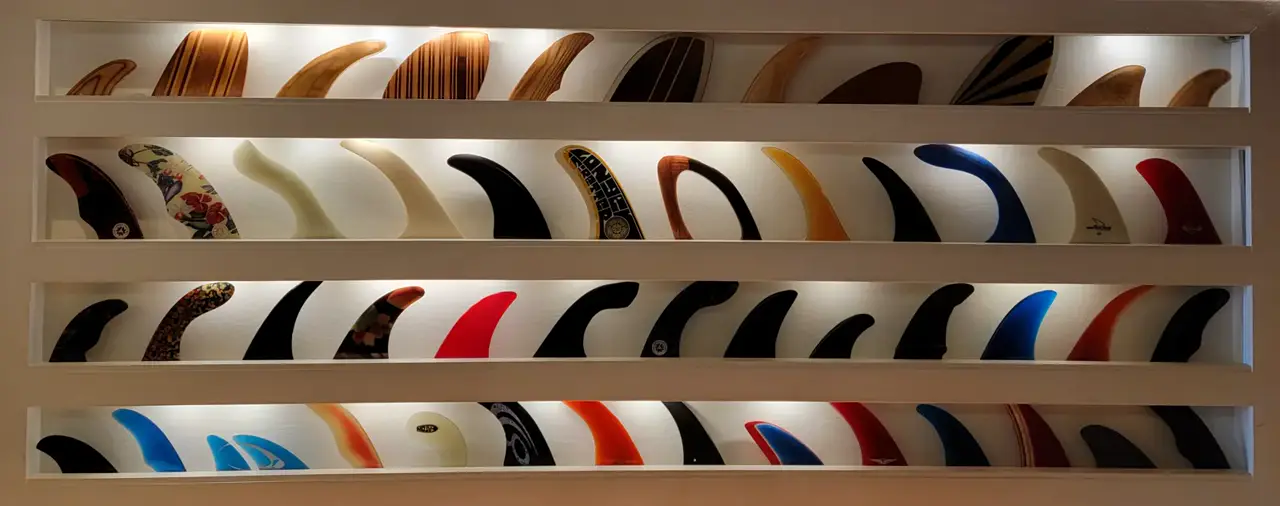
- Quads for Speed and Slop: Quad setups remove the drag of a center fin, channeling water cleanly out the tail. They are unrivaled for finding speed across gutless wind swell shoulders.
- Twin Keels for Maximum Trim: Wide base keels generate unparalleled down-the-line projection, turning slopey knee-high waves into playful speed runs.
- Thrusters for Clean Pockets: When morning offshore winds groom beach breaks into punchy wedges, the classic tri-fin setup offers pivot, release, and control in the pocket.
Learn more about base dimensions, cant angle, and foil constructions in our dedicated Fin Systems Guide.
 QUAD FIN SETUP: No center drag        THRUSTER: Maximum pivot
       │\        /│                          │\   │\   /│
       │ \      / │                          │ \  │ \ / │
       └──┘    └──┘                          └──┘ └──┘└──┘
    (Ultimate Spring Speed)               (Control in Clean Pockets)
Pro Tip: In gutless spring surf, switch from stiff fiberglass fins to medium-flex carbon-composite fins. The added flex spring stores and releases energy through slow turns, generating artificial drive when the wave provides none.
Spring Surf Quiver Essentials: Budget & Two-Board Apartment Setups
Not every surfer has the budget or apartment storage for an eight-board rack. Fortunately, you do not need an endless lineup of craft to score. Focusing on two core spring surf quiver essentials lets you cover 90% of all shoulder-season swells without breaking the bank or overwhelming your living space.
The Ultimate Two-Board Compromise
- The Modern Hybrid Groveler (PU or EPS): Sized 2–3 inches shorter than your height with plenty of foam under the chest. Ride it as a quad on low-tide shorebreaks, and swap to a thruster when waves become peaky.
- The 6'8" Egg / Performance Mid-Length: Built with a 2+1 fin setup. This single shape serves as your crowd-beater on busy weekends, your glide machine on soft points, and your dependable daily driver when winter-grade groundswells appear out of nowhere.
THE COMPACT APARTMENT QUIVER (COVERS 90% OF SESSIONS)

┌────────────────────────┐      ┌────────────────────────┐
│      5'8" GROVELER     │  +   │    6'8" MID-LENGTH     │
│ (Wind Chop / Wedges)   │      │ (Crowds / Big Swells)  │
└────────────────────────┘      └────────────────────────┘
If purchasing brand-new boards stretches your budget, consider scouring the used rack for durable shapes. Discover how alternative designs shaped the sport in our deep dive into Surfing History, or consult our Board Types Guide to verify that a secondhand outline will meet your seasonal needs.
Wetsuit Transitions and Spring Maintenance Checklist
As the equinox passes, shifts in sea and air temperature demand seasonal upkeep. Salt, neoprene wear, and sun exposure can compromise your equipment if neglected.
SPRING SURF MAINTENANCE CHECKLIST
 [ ] Scrape old, cold-water wax completely down to bare glass
 [ ] Inspect rail shatters, tail crushes, and fin box stresses
 [ ] Transition from cold-water to cool/warm-water wax formula
 [ ] Check leash integrity for saltwater rot and pin stretching
 [ ] Wash and store winter neoprene in a dry, UV-protected space
- De-Waxing and Inspecting: Winter wax is soft and melts rapidly on warm spring days, collecting sand and dirt. Scrape your deck down to the fiberglass and inspect your deck and rails for hidden pressure dents or hairline stress fractures that occurred during winter beatings. Repair them early at our Repair Center to prevent water intrusion and foam delamination.
- Wax Formulation Shift: Switch out your ultra-soft cold wax (sub-55°F) for cool (58–68°F) or warm-water formulas. Layering cool wax on a soft winter base causes slick, messy lumps that lead to blown drop-ins.
- Leash Overhauls: Spring shorebreaks expose your urethane leash to intense localized pull. Inspect your leash cord for micro-tears and flush saltwater out of all swivels.
- Neoprene Storage: Rinse your thick winter booties, gloves, and 5/4mm suit thoroughly with fresh water and specialty neoprene wash. Hang them in the shade to dry completely before storing them flat for autumn.
Pro Tip: Never use hot water or direct sunlight to melt old wax off your board. High heat can cause EPS foam blanks to off-gas rapidly, resulting in bubbled glass and ruined rails.
Still unsure which dimensions match your height, home break, or skill level? Chat directly with our interactive the board finder for immediate, hyper-personalized surfboard sizing recommendations.
Dial In Your Spring Quiver Today
Navigating shoulder-season surf does not have to be an exercise in frustration. By aligning your spring surf quiver essentials with local wind patterns, shifting sandbanks, and your own skill progression, you can turn chaotic ocean conditions into unforgettable sessions. Take an honest audit of your gear, strip off the old winter wax, choose boards that maximize paddle power and release, and hit the water ready for whatever spring throws at you.
Frequently Asked Questions
What are the most important spring surf quiver essentials?
The two most essential boards for spring are an EPS performance groveler (or wide twin fish) for short-period wind swell, and a versatile daily driver or performance mid-length for cleaner groundswells. Having these two outlines ensures you can tackle everything from waist-high onshore chop to overhead peaks.
How should I adjust surfboard volume when transitioning from winter to spring?
When shedding heavy winter rubber (such as dropping from a 5/4mm with boots to a 3/2mm steamer), you lose 4 to 6 pounds of waterlogged weight. You can comfortably reduce your performance board volume by 0.5 to 1.5 liters without sacrificing paddle efficiency, giving you sharper rail control.
What are the best spring surfboards for windy beach breaks?
The best boards for windy beach breaks are wider, lower-rocker boards made with traditional PU (polyurethane) construction. While EPS epoxy floats exceptionally well, PU cuts through bumpy wind chop more smoothly without chattering or bouncing on steep drops.
Which fin setup works best for messy spring wind swells?
Quad fin setups are ideal for messy spring wind swells. By eliminating the drag of a trailing center fin, quads provide immediate acceleration, generate speed across flat, crumbly wave faces, and maintain loose pivot through maneuvers.
How does this regional spring surfboard guide help me pick boards for my area?
Our guide factors in oceanographic patterns: West Coast surfers need boards built to handle cold upwelling and strong NW chop; East Coast surfers need quick-planing twin fins for punchy, short-period wind peaks; and European surfers need versatile mid-lengths to manage extreme tidal swings and shifting sandbars.