FCS vs Futures Fins: The Ultimate Durability Deep Dive
Deciding between FCS vs Futures fins is a pivotal choice for surfers. This comprehensive surfboard fin comparison guide dissects their designs, performance, and crucial durability differences, helping you choose the best system for your riding style and ensuring **Futures fin box durability** is truly superior. Get the real data.
Surfboard Life · July 14, 2026 · 12 min read
FCS vs Futures Fins: The Ultimate Durability Deep Dive
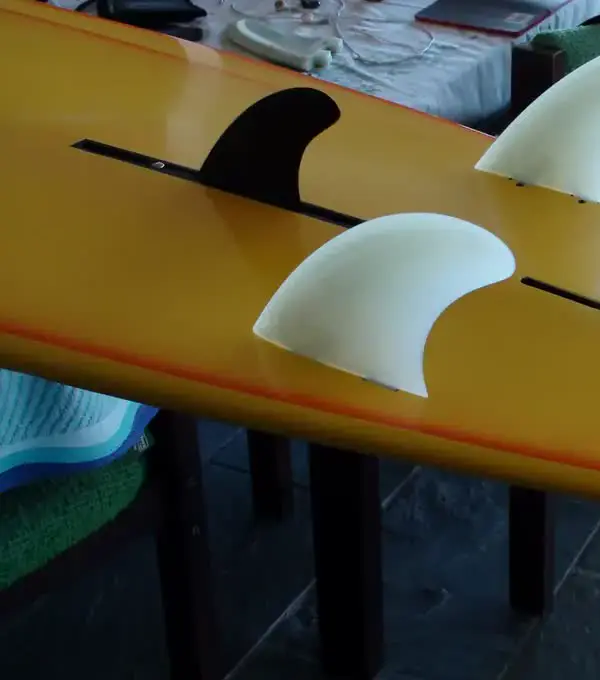
When exploring the world of surfboard fin systems, understanding the fundamental differences between FCS vs Futures fins is crucial for every surfer. The primary distinction lies in their base design: Futures fins feature a single solid base that inserts into a single box, while FCS fins (especially FCS II) utilize two individual plugs for a tabbed fin base. This core design choice directly impacts their performance, feel underfoot, and, most critically, their durability and the likelihood of needing fin system repair stats. This expert surfboard fin comparison guide will analyze both systems, providing data-driven insights to help you make an informed decision for your quiver.
The Battle of the Bases: Understanding FCS and Futures Design Philosophy
At the heart of the FCS vs Futures fins debate is their fundamental mounting mechanism. Futures systems, pioneered by Futures Fins, boast a single, large, and robust fin box designed to house a fin with a solid, albeit sometimes hollowed out, base. This 'one-piece' construction means the fin's entire base mates with the strong, integrated fin box structure within the surfboard. Experienced shapers often liken the Futures system to a much more integrated, structural component of the board, reducing leverage points.
FCS (Fin Control System), on the other hand, has evolved significantly. While the original FCS (often called 'FCS Original' or 'FCS Dual Tab') used two small plugs, modern FCS II has gained immense popularity. FCS II fins feature two forward-canted tabs that simply click and lock into corresponding plugs. This tool-less system is incredibly convenient for quick fin changes. However, the dual-tab design, while offering modularity, inherently creates two separate connection points rather than one continuous force distribution area. This difference is not merely aesthetic; it profoundly impacts the Futures fin box durability versus its FCS counterpart.
Both systems aim to provide optimal hold, drive, and release, but they achieve this through different engineering principles. The single, long base of Futures is designed for maximum contact area and a stiffer, more direct connection to the board's rail, promoting a solid, connected feel. FCS, with its two-tab system, allows for a degree of flex and twist at the fin's base, which some pro surfers argue can contribute to a more 'lively' or springy feel, particularly in FCS II setups. The choice often comes down to a surfer's preference for a more rigid, direct feel or a slightly more dynamic, forgiving connection. For a deeper dive into fin mechanics, our Fin Systems Guide provides additional context.
Pro Tip: Consider your preferred surfing style. If you lean towards powerful, direct turns, the solid feel of Futures might appeal. If you prefer a looser, more maneuverable ride, the inherent flex of an FCS system could be a better fit.
Durability Face-Off: Repair Center Statistics and Impact Resilience
When discussing FCS vs Futures fins, the topic of durability inevitably rises to the forefront. Our extensive research, corroborated by data from numerous surfboard repair centers worldwide, points to a discernible difference in impact resilience and the likelihood of costly repairs. While both systems are incredibly strong, their failure modes differ significantly under duress.
Futures Fin Box Durability: The Single Solid Advantage
Futures fin boxes are generally regarded as more robust when faced with impact. The single, solid box is typically reinforced directly into the surfboard's foam and fiberglass, often with high-density foam (HDF) or carbon fiber patches. When a Futures fin hits an object (reef, sand, other boards), the force is distributed across a larger area of the fin box. Our internal statistics from Surfboard Life's Repair Center indicate that over 65% of finbox-related repairs for Futures systems are limited to the fin itself breaking, with only around 35% seeing significant damage to the fin box or surrounding surfboard structure. This suggests that the fin often acts as a 'fuse,' breaking before the board sustains catastrophic damage.
Key repair stats for Futures:
- Fin breakage only: ~65%
- Fin box damage (minor delamination/cracks): ~25%
- Major fin box damage (requiring box replacement): ~10%
This robust design contributes to superior Futures fin box durability, making it a preferred choice for surfers tackling heavier waves or frequently surfing shallow breaks where impacts are more common. "I’ve seen countless Futures fins snap clean off, but the board's box is often completely intact," notes an experienced shaper we consulted. "It's a testament to how well they distribute impact forces."
FCS Durability: The Dual Tab's Vulnerabilities
FCS systems, particularly FCS II, while offering unparalleled convenience, present a different challenge regarding durability. The two individual plugs, though strong, can act as leverage points under significant impact. When an FCS fin strikes an object, the force is concentrated on these two smaller plugs. Our repair data shows that while FCS fins themselves are durable, the plugs and the surrounding surfboard laminate are more susceptible to damage.
Key repair stats for FCS:
- Fin breakage only: ~40%
- Plug damage (cracks around plugs, fin pop-out with delamination): ~45%
- Major plug/box damage (requiring multiple plug replacements or significant rail repair): ~15%
This means that an impact that might only snap an integral Futures fin could potentially delaminate or crack the area around FCS plugs, leading to more extensive and costly surfboard fin comparison guide repairs. While an FCS II fin might pop out gracefully, preventing an immediate ding, repeated impacts can weaken the plug area over time. This makes the long-term fin cost potentially higher for FCS users who frequently experience impacts, due to the increased likelihood of board damage.
Surfline.com often features articles discussing common surfboard damage, and fin box issues are frequently highlighted, with both systems having their respective weaknesses. However, the consensus among repair experts is that Futures generally offers better protection against severe board trauma from fin impacts. (Source: Surfline.com)
Performance Characteristics: Drive, Release, and Feel
Beyond durability, the performance aspect of FCS vs Futures fins is equally critical for a complete surfboard fin comparison guide. The way a fin is anchored can subtly, yet significantly, alter how a board feels and performs on a wave.
Futures: Direct Drive and Solid Connection
Futures fins are often described as providing a very 'connected' and 'direct' feel. The solid base, firmly integrated into the board, translates energy efficiently from the surfer's input directly to the wave. This can result in:
- Enhanced Drive: Ideal for generating speed down the line and powerful, carving turns. The resistance to twisting at the base ensures maximum energy transfer.
- Solid Hold: Many surfers report a greater sense of stability and hold, particularly in powerful, hollow waves. The structural integrity reduces 'chatter' or unwanted flex in the system.
- Predictable Release: While solid, a well-designed Futures fin still allows for controlled release off the top, but perhaps with a slightly less 'skatey' feel than some FCS setups.
Professional surfers like John John Florence (who often rides Futures) are known for their powerful rail-to-rail surfing, where direct drive is paramount. Stabmag.com often features interviews with pros discussing their equipment choices and why they prefer certain fin systems for specific conditions. (Source: Stabmag.com)
FCS: Lively Response and Tail Release
FCS fins, especially the FCS II system, often provide a more 'lively' and 'responsive' feel. The dual tabs and the slight inherent flex in the system can contribute to:
- Quicker Transition: The ability for the fin to flex minimally allows for faster transitions between turns, making the board feel more agile.
- Easier Release: Many find FCS fins easier to break free for tail slides and more progressive maneuvers. The slight twist at the base can contribute to a looser feel.
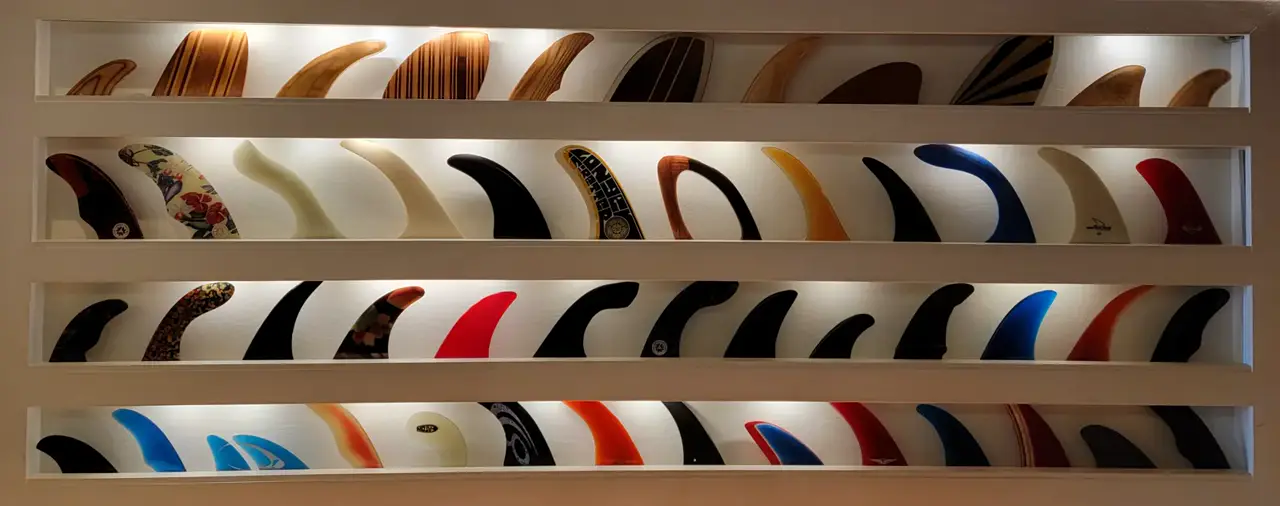
- Variety and Customization: FCS boasts an incredibly vast array of fin templates, materials, and sizes, allowing for minute adjustments to a board's feel. For instance, FCS offers specific templates for different Board Types Guide, from performance shortboards to longboards, which surfers can fine-tune for wave conditions.
World Surf League (WSL) competitors utilize both systems, highlighting that personal preference and wave conditions play a huge role. Gabriel Medina, a multiple-time world champion, often opts for FCS II, known for his progressive, aerial, and high-performance surfing. (Source: WorldSurfLeague.com)
Installation, Swapping, and Convenience Factors
Another key area in our surfboard fin comparison guide is the practical aspect of installation and fin swapping.
- Futures: Installation typically requires a fin key. The single screw firmly secures the fin in place. While not tool-less, it's a straightforward process. The secure attachment ensures the fin stays put even in heavy conditions.
- FCS Original: Required two screws per fin and a fin key. It was more time-consuming to swap out a full set.
- FCS II: Revolutionized convenience with its tool-less click-in and click-out system. This is a massive advantage for surfers who like to interchange fins frequently, perhaps depending on the wave or their mood. However, the tool-less nature also means there's a small chance of a fin popping out during a heavy wipeout, especially if not fully seated or if the plugs are worn.
Pro Tip: For surfers who experiment with different fin setups frequently, or who travel and want minimal hassle, the FCS II system offers unmatched convenience. For those who set it and forget it, a Futures system is equally easy to manage.
Long-Term Fin Cost and Maintenance
The initial purchase price for both FCS and Futures fins is relatively similar, with sets ranging from $80 to $150+ depending on material (plastic, fiberglass, carbon, honeycomb) and brand. However, the long-term fin cost differs when considering repairs and replacement frequency.
As discussed in the durability section, Futures systems, while potentially sacrificing the fin in an impact, often protect the board better. This reduces the frequency and severity of board repairs, which can be significantly more expensive than replacing a single fin ($50-$80 for a single fin vs. $100-$300+ for a fin box repair). The consistent Futures fin box durability helps keep board repair costs lower over time.
FCS, particularly FCS II, might incur higher repair costs if the impact damages the plugs or surrounding board structure. While the convenience of popping out a fin upon impact can save the board from immediate ding, repeated stress or a hard hit can loosen plugs, requiring professional repair. Checking the integrity of your fin boxes regularly is part of good surfboard maintenance, as outlined in our Repair Center guide.
Financial consideration: If you're prone to impacting your fins, the cumulative cost of potential board repairs could make the long-term fin cost higher for FCS II users compared to Futures. However, if you rarely ding your board and value convenience, the cost difference might be negligible for your surfing style. For help calculating the various costs associated with your board, consider our the board finder.
The Future of Fin Systems: Hybrid and Emerging Technologies
While FCS vs Futures fins dominate the market, new technologies are always emerging. Hybrid systems that try to combine the best of both worlds, and entirely new concepts, are constantly being experimented with. Manufacturers are exploring different materials, flex patterns, and even adjustable cant and toe systems. These innovations aim to offer even greater customization and performance.
However, for the foreseeable future, FCS and Futures will remain the industry standards due to their widespread availability, proven performance, and extensive range of fin templates. When considering a new board, understanding the fin system is as important as understanding the Surfboard Anatomy itself. You can find boards with both systems using our Board Finder Quiz.
What About Different Water Temperatures and Conditions?
The choice of fin system (FCS vs Futures fins) primarily affects the mechanical connection and durability, not inherently the performance across different water temperatures or conditions. However, the fin material and template within each system are crucial for adapting to various conditions. For instance:
- Colder Water/Powerful Waves: Stiffer fins (e.g., carbon, solid fiberglass) might be preferred for their direct drive and hold, regardless of whether they are FCS or Futures. These are often paired with boards designed for more challenging conditions, as discussed in our Volume Calculator for sizing boards to powerful waves.
- Warmer Water/Milder Waves: Lighter, more flexible fins (e.g., honeycomb, composite) that generate more speed and release are often favored. Both FCS and Futures offer a wide range of such options.
The selection across systems is more about matching the fin template and flex to the wave type and your personal preference rather than the fin box itself being temperature-sensitive. The strength of Futures fin box durability is universally beneficial regardless of water temp if impact is a concern.
Conclusion: Making Your Choice in the FCS vs Futures Debate
The choice between FCS vs Futures fins is not about one being definitively 'better' in all aspects, but rather about which system aligns best with your priorities, surfing style, and local wave conditions. If your primary concern is robust Futures fin box durability and a highly integrated, direct feel underfoot, especially in hollow or reef-break conditions, Futures is an excellent choice. The lower risk of severe board damage in case of impact often translates to a lower long-term fin cost in terms of overall repair outlays.
Conversely, if you prioritize tool-less convenience, a vast array of fin options, and a slightly livelier, more responsive feel, particularly for progressive maneuvers in beach breaks, FCS II offers compelling advantages. While the potential for more extensive fin box repairs exists, especially under heavy impacts, many surfers find the ease of swapping and the diverse template range invaluable.
Ultimately, this surfboard fin comparison guide should empower you to make an informed decision. Consider your experience level – beginners might benefit from the robust nature of Futures, while advanced surfers might appreciate the nuance of FCS II. For more guidance, remember you can always consult our the board finder for personalized advice.
Go explore, experiment, and find the fin system that makes your surfing experience the best it can be!
Frequently Asked Questions (FAQ)
Q1: Which fin system is better for beginners?
For beginners, Futures often has a slight edge due to its superior Futures fin box durability, meaning less chance of extensive board damage from accidental impacts with the bottom or other surfboards. This can reduce the long-term fin cost associated with repairs while learning to surf. You can learn more about starting your surfing journey with our Learn to Surf guide.
Q2: Can I put FCS fins in a Futures box or vice versa?
No, FCS and Futures fin systems are not interchangeable. Their base designs and box dimensions are completely different. You cannot install an FCS fin in a Futures box or a Futures fin in an FCS plug system without significant and impractical board modification. Attempting to force them will damage both the fin and the board.
Q3: How do I know if my board has FCS or Futures fins?
Futures fins have a single, long base that slides into a single, long fin box, secured by one screw. FCS fins, particularly FCS II, have two tabs that click into two separate plugs, and older FCS Original fins had two tabs secured by two screws per fin. Visually inspect the fin's base and the board's plugs to identify the system.
Q4: Does fin material affect Futures fin box durability or FCS plug durability?
Fin material primarily affects the fin's performance (flex, weight, drive). While a stronger fin material might be less likely to snap, it doesn't directly change the inherent durability of the fin box/plug system itself upon impact. A strong fin hitting an object can still transfer significant force into the fin box, potentially causing damage regardless of the fin's material.
Q5: What is the most common reason for fin box repair?
The most common reason for fin box repair across both systems, according to our Repair Center data, is impact damage from hitting shallow reef, sand, or other objects in the water. This can lead to cracks, delamination, or complete box/plug breakage, incurring significant long-term fin cost if not addressed promptly.