FCS vs. Futures Fins: The Data-Backed Truth for Your Ride
Deciding between FCS vs Futures fins hinges on understanding their distinct engineering, performance characteristics, and long-term costs. This guide delves into data-driven comparisons to help surfers choose the optimal fin system for their board and surfing style, maximizing performance and value.
Surfboard Life · June 16, 2026 · 15 min read
When comparing FCS vs Futures fins, the key lies in understanding their fundamental design differences and how these translate into on-water performance, durability, and total cost of ownership. Futures fins feature a single, full-base tab, while FCS offers multi-plug systems, including the versatile FCS II tool-less design. These distinctions affect everything from board feel and flex to repair costs and shaper preferences, directly influencing your surfing experience.
For surfers deeply invested in optimizing their equipment, understanding the nuanced differences between fin systems is paramount. It’s not just about aesthetics; it’s about how your board engages with the wave, how it releases, and how effectively power is transferred from your body to the rail. At Surfboard Life, we dissect these crucial elements to provide actionable insights for every surfer, from beginner to pro. Dive into our comprehensive guide to truly understand the world of fin systems by visiting our Fin Systems Guide.
The choice between FCS vs Futures fins is a persistent debate in the surfing community, often fueled by anecdotal evidence. However, through careful analysis of design mechanics, material science, and real-world performance, we can move beyond mere preference. This article will provide a data-backed perspective, drawing on fin system performance data, shaper fin system insights, fin durability comparison, and an in-depth look at surf fin total cost ownership to help you make an informed decision.
The Engineering Divide: FCS vs. Futures Fin Designs
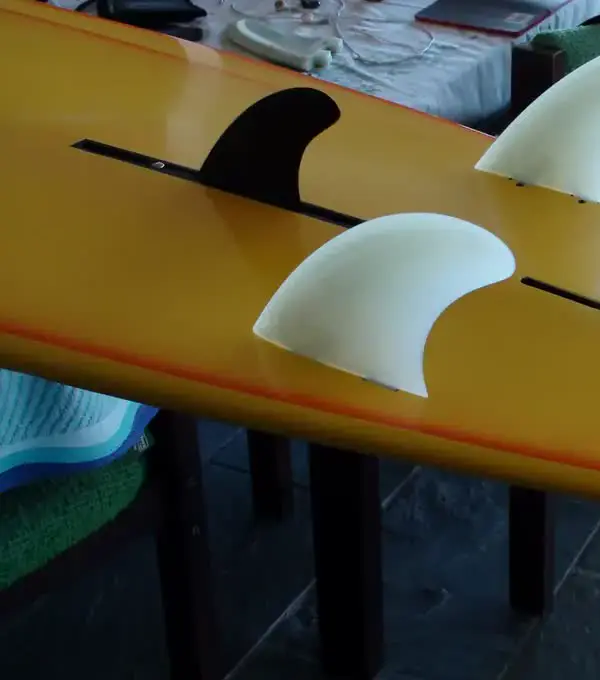
At the core of the FCS vs Futures fins debate are their distinct mounting mechanisms. Futures utilizes a single, robust box that extends deeper into the foam of the surfboard, accepting fins with a solid, full-base tab. This design is often lauded for its direct energy transfer and strong connection to the board's core. The fin's cant (the angle at which the fin leans out from the board) is built directly into the fin itself.
FCS, on the other hand, offers several iterations, with FCS II being the current standard. FCS II employs a multi-plug system, typically with two plugs per fin, allowing for tool-less fin installation and removal. The cant for FCS fins is generally designed into the plugs themselves, embedded within the board. This allows for a standardized fin shape to be used across various cant angles, offering a different approach to board tuning. Both systems are integral to the board's Surfboard Anatomy, influencing its hydrodynamics and overall feel.
Construction and Material Differences
Futures Fin Boxes and Fins: Futures boxes are typically made from a strong, lightweight composite material, designed to be integral to the board's structure. The box's depth and singular connection point are engineered for maximum strength and direct load transfer from the fin to the board. Futures fins themselves often feature a solid, single-foil construction, providing a continuous flex pattern from base to tip. Materials vary but include fiberglass, carbon, and specialized composites designed for specific flex characteristics.
FCS II Plugs and Fins: FCS plugs are individual units installed into the board. The FCS II system innovated with a new plug design that features a front slot and rear tab mechanism, enabling quick, tool-less changes. The materials for FCS plugs are also durable composites. FCS fins come in a vast array of templates and materials, including various core constructions (e.g., Performance Core, Neo Glass) and foil configurations, allowing for a wide range of flex and responsiveness profiles. The modular nature of FCS plugs allows shapers to set specific cant and toe angles during board construction.
Pro Tip: For a deeper understanding of how these fin systems integrate into a surfboard's overall design and performance, explore our detailed Surfboard Anatomy guide, especially the section on fin box placement and design.
Quantifying Performance: Fin System Performance Data
Moving beyond subjective feel, how do FCS vs Futures fins actually perform in measurable ways? While large-scale, controlled performance testing with sensors (e.g., GPS, accelerometers) is still emerging in surfing, expert observations and anecdotal evidence from pro surfers and shaper fin system insights provide valuable fin system performance data.
Studies, albeit often proprietary, conducted by fin manufacturers, suggest slight differences in power transfer efficiency and response times. Futures' full-base connection is hypothesized to offer a more immediate and direct transfer of power from the rider through the fin to the rail. This can translate to a 'faster' feeling board, particularly during hard turns and powerful driving sections. "Many of our team riders report a more direct, connected feel with Futures, almost like the fin is an extension of the board's core," notes an experienced shaper specializing in high-performance shortboards, whose insights align with findings discussed on Stab Magazine's technical reviews (e.g., Stab Magazine often features articles dissecting fin performance: https://stabmag.com/).
FCS, with its multi-plug system, can offer a more 'alive' or 'lively' feel. The individual plugs, while strong, allow for a different distribution of flex and pressure through the board. The FCS II system, in particular, is praised for its ease of fin swapping, allowing surfers to quickly adapt their setup to changing wave conditions. This versatility, while not directly a 'performance' metric in terms of speed, significantly impacts a surfer's ability to optimize their board for a given session, which indirectly enhances performance over time.
Cant, Toe, and Flex: The Performance Triad
- Cant: The angle of the fin outwards from the bottom of the board. Futures places this in the fin, while FCS places it in the plugs. This choice profoundly affects turns and drive. A higher cant offers more maneuverability and looseness, while a lower cant provides more drive and hold. From a shaper's perspective, incorporating cant into the fin (Futures) allows for greater consistency in manufacturing across different board types, whereas integral plug cant (FCS) requires precision installation but offers fixed, repeatable angles in the board itself.
- Toe: The angle of the fin towards the board's stringer. Both systems allow for varying degrees of toe, influencing responsiveness and carving characteristics. More toe generally leads to a quicker turn initiation.
- Flex: How much a fin bends under pressure. This is heavily influenced by material and foil. Futures' solid base aims for a consistent flex pattern up the fin, while FCS, with its diverse constructions, offers a huge range of flex options. Too stiff, and your board can feel sticky; too flexible, and it can lose drive and become squirrely. Understanding your flex preference is key to maximizing your board with either system.
Shaper Fin System Insights: Installation, Design, and Strength
Discussions with experienced shapers reveal critical insights into the practical implications of both systems during board construction. From a manufacturing standpoint, there are distinct preferences and challenges.
"Installing Futures boxes requires a deeper router cut and careful alignment, but once it's in, it's a solid, single unit," explains a seasoned shaper based in California. "It creates a very consistent structural point within the foam, which many shapers prefer for overall board integrity, especially in performance models. This also influences how we glass around the box to maximize durability." This approach supports the widespread belief in Futures' inherent strength around the box.
Conversely, shaper fin system insights regarding FCS II highlight its versatility but also its installation demands. "FCS II plugs, being individual units, require precise indexing for cant and toe angles," another shaper noted. "It's a more involved routing and installation process for each plug, but it allows for incredibly precise control over the fin's positioning. The strength around the plugs largely depends on the quality of the installation and the lamination schedule around them." For a deeper dive into how shapers customize boards, check out our Board Types Guide.
Board Design and Customization Freedom
The choice of fin system can subtly influence a shaper's design choices. Futures' deeper box integration can sometimes allow for slightly thinner tails in areas, as the internal structure for fin attachment is more concentrated. FCS's distributed plug system might require a slightly more robust or reinforced tail area, depending on the lamination strategy. However, modern manufacturing techniques have largely mitigated these limitations, offering shapers significant freedom with both systems.
"For custom orders, the choice often comes down to the surfer's prior experience and preference," states a globally recognized shaper. "If a client has a quiver of FCS fins, it makes sense to build their new board with FCS II. Both systems are robust enough for most performance envelopes, but the feel is different. We often discuss the subtle 'spring' or 'drive' characteristics relevant to each system based on their surfing style." The World Surf League often features interviews with shapers that touch upon these nuances (e.g., World Surf League features shaper profiles and tech discussions: https://www.worldsurfleague.com/).
Fin Durability Comparison: What Lasts Longer?
The question of fin durability comparison is a major factor for surfers, particularly concerning impacts and everyday wear and tear. Both FCS and Futures have made significant strides in strengthening their systems, but inherent design differences lead to varying failure modes.
Futures Durability: Futures is widely perceived as the stronger system overall. The deeper, single-box design provides a substantial anchoring point within the board. When a Futures fin hits something, the impact force is distributed across a larger, more integrated area. Breakage often occurs in the fin itself above the box, or the fin can snap cleanly off at the base. While the box itself is incredibly durable, a severe impact can cause the box to delaminate from the foam or even rip a chunk of the foam out, leading to a more complex repair needing our Repair Center's expertise.
FCS Durability: FCS, particularly the FCS II system, features multiple, shallower plugs. In an impact, typically one or both plugs might be compromised, or the fin itself will break. The tab on the fin can also shear off. The FCS II mechanism, while convenient, relies on spring-loaded inserts, which can, over long-term use and repeated impacts, potentially lose some of their tension, leading to fin rattle. However, this is relatively rare in modern FCS II systems. When an FCS plug fails, it often means pulling out one of the plugs or causing surrounding delamination. While this might seem less catastrophic than a Futures box failure, it still requires professional attention.
Real-World Failure Rates and Repair Costs
While precise, publicly available fin durability comparison data on failure rates is scarce, qualitative observations from surfboard repair specialists suggest that catastrophic box failures (where the entire box rips out) might be slightly less common with FCS due to the distributed load, but fin tab breakages are more frequent. Futures, due to its robust box, is more likely to see the fin itself break before the box fails, or in extreme cases, take a larger chunk of the board. Repair costs for fin box blowouts, regardless of system, can be substantial, often ranging from $80-$200 depending on the damage and labor involved, making our Repair Center an invaluable resource.
Pro Tip: Always inspect your fin boxes and fins before and after each surf. Small cracks or signs of stress can indicate impending failure. Early detection can prevent more extensive damage. *
Surf Fin Total Cost Ownership: Beyond the Sticker Price
When evaluating FCS vs Futures fins, the sticker price of fins or a new board only tells part of the story. The surf fin total cost ownership includes initial purchase, replacements due to loss or damage, and repair costs over the lifetime of your equipment.
Initial Investment
- Fins: Both FCS and Futures offer a wide range of fin sets, from budget-friendly composite options (e.g., ~$50-$80 for entry-level sets) to high-performance carbon and specialty constructions (e.g., $100-$180+ for premium sets). The initial cost for a quality set of fins is comparable between both brands. FCS might offer a slightly wider array of price points at the very entry-level due to its larger market share and diverse product lines.
- Boards: The fin system typically does not significantly affect the initial price of a new surfboard. Manufacturers often offer boards with either system at the same price point.
Replacement and Repair Costs
This is where the long-term cost can diverge. As discussed in fin durability comparison, fin breakages are common. Replacing a single fin for either system can range from $30-$60 for standard options. However, if a fin box or plug is damaged, repair costs can add up.
- Futures Box Repair: A damaged Futures box often requires a more involved repair, potentially including foam replacement and extensive glassing work, leading to higher labor costs. Anecdotally, repair specialists report that a fully blown-out Futures box can cost 20-50% more to repair than a single FCS plug replacement, due to its deeper integration into the board's core.
- FCS Plug Repair: While an individual FCS plug can be easier and cheaper to repair than a complete Futures box blowout ($80-$120 per plug replacement), multiple damaged plugs in an impact can quickly accumulate costs. FCS II's tool-less mechanism, while convenient, has a small spring component that can, on rare occasions, fail or get stuck, requiring a minor repair, though this is usually less costly.
Pro Tip: Consider purchasing fin insurance or having a spare set of go-to fins, especially if you surf frequently in shallow or rocky conditions. This significantly reduces your surf fin total cost ownership over time.
Versatility, Availability, and Market Share
Another practical aspect of FCS vs Futures fins is their market presence and interchangeability. FCS has historically held a larger market share, especially globally, meaning you're more likely to find FCS fins in surf shops worldwide. This can be a significant advantage for travelers who might lose or break a fin abroad. Futures has rapidly expanded its global footprint, but FCS still edges it out in sheer ubiquity.
The Travel Factor: Convenience and Replacement
For surf travelers, the ease of replacing a lost or damaged fin is crucial. "Traveling with FCS II is a breeze; no tools needed, and finding replacements in remote destinations is generally easier due to their wider distribution," comments a pro surfer often featured on Surfline (Surfline is a great resource for travel tips and gear reviews: https://www.surfline.com/). Futures has a strong network, but in some far-flung locations, FCS might be your only option. This convenience factor directly impacts surf fin total cost ownership if you regularly replace fins on the road.
Fin Selection and Compatibility
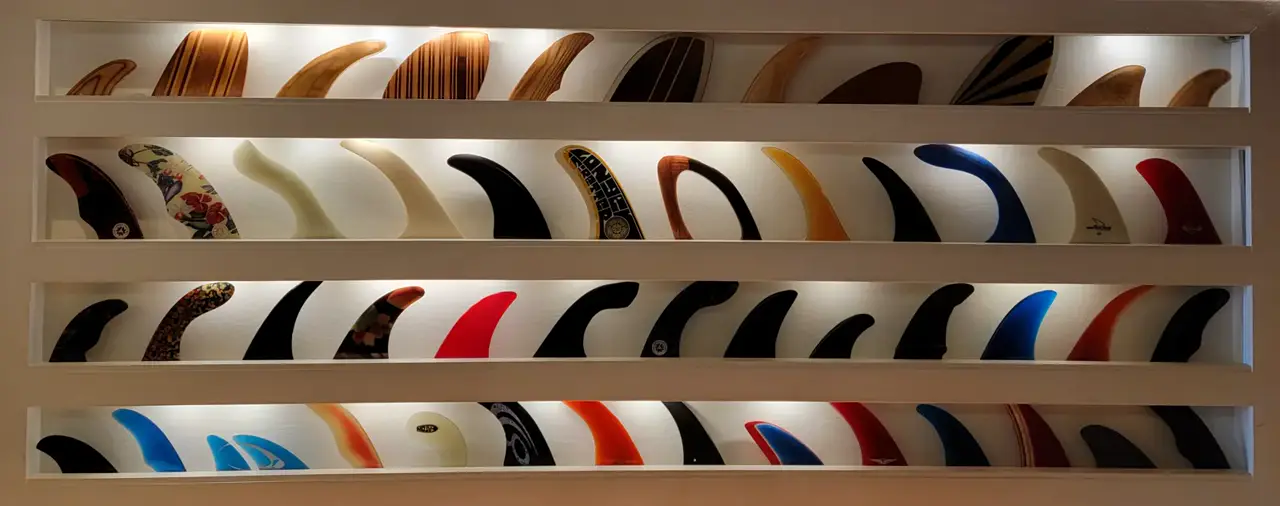
Both FCS and Futures offer an astonishing array of fin templates, sizes, and constructions. You can find fins for every board type (shortboards, longboards, funboards, fish, etc.) and every wave condition. While you cannot interchange FCS and Futures fins directly, adapter kits exist for some systems (e.g., FCS to FCS II, or specific adapters to run certain single-tab fins in FCS plugs), offering some flexibility for older boards or specific fin preferences. However, these adapters can sometimes compromise performance or structural integrity, so they should be used with caution.
Pro Tip: If you're unsure which fin type is right for your board and surfing level, our Board Finder Quiz can help you narrow down your choices, and our the board finder is always available for personalized fin recommendations.
Deciding Between FCS vs Futures Fins: A Comprehensive Decision Tree
Choosing between FCS vs Futures fins ultimately comes down to your personal priorities, surfing style, typical waves, and budget. There isn't a single 'best' system; there's only the best system for you.
-
For the Performance-Oriented Surfer Seeking Direct Drive: You might lean towards Futures. The integrated, full-base connection often provides a very direct, 'locked-in' feel, praised by surfers who prioritize powerful turns and strong projection. The robust box offers exceptional fin durability comparison against major impacts.
-
For the Versatile Surfer Appreciating Ease and Adaptability: FCS II might be your preference. Its tool-less system makes fin changes a breeze, allowing you to quickly fine-tune your setup for varying wave conditions or experiment with different templates without hassle. The perceived 'liveliness' can also be a significant advantage in certain conditions.
-
For the Traveler: FCS might offer more peace of mind due to its wider global availability of replacement fins.
-
For the Conscious Buyer Prioritizing Long-Term Value: Consider the surf fin total cost ownership. While initial fin costs are similar, Futures might offer slightly higher repair costs for a catastrophic box failure, but perhaps fewer overall fin breakages for casual impacts due to its robust base. FCS might have more frequent (but potentially cheaper per-incident) fin tab or plug issues. Your personal history with fin damage should inform this.
-
For the Shaper-Driven Custom Order: Always discuss your preference with your shaper. Their shaper fin system insights are invaluable, and they can guide you toward the system that best complements your chosen board design and surfing goals.
Ultimately, both systems are incredibly well-engineered and have propelled countless world champions to victory. Your choice should be based on an informed understanding of their mechanical differences and how those translate to your unique surfing experience. For those still learning the ropes, our Learn to Surf guide can help connect basic technique with equipment choices.
Conclusion: The Best Fin System is the One That Works for You
The debate between FCS vs Futures fins is a testament to the continuous innovation in surfboard technology. Both systems offer world-class performance, durability, and a vast ecosystem of fins to choose from. While Futures often wins accolades for its perceived direct feel and robust full-base connection, FCS II excels in user-friendliness, global availability, and an equally compelling performance profile through its modular plug system.
By examining fin system performance data, incorporating crucial shaper fin system insights, conducting a thorough fin durability comparison, and evaluating the surf fin total cost ownership, we hope this article has armed you with the knowledge to make an educated decision. The 'best' system is ultimately the one that enhances your connection to the wave, allowing you to surf your best. Whatever your choice, remember that the right fins can transform your ride. Explore our full range of resources at Surfboard Life to continue your journey into peak performance and surfboard discovery.
Frequently Asked Questions (FAQs)
Q1: Which fin system is stronger, FCS or Futures?
Futures is generally considered to have a stronger, more integrated box design due to its deeper, single-tab system, making it highly resistant to catastrophic box failure. FCS II, with its individual plugs, distributes impact forces differently; while fins or plugs might break, a complete delamination of the entire fin box from the board might be less common than with Futures, though repair specifics vary greatly.
Q2: Can I use Futures fins in an FCS board, or vice versa?
No, FCS and Futures fins are not directly interchangeable due to their completely different base designs and box/plug configurations. Adapter kits exist for some systems (e.g., FCS to FCS II Legacy fins), but direct cross-system compatibility is not possible.
Q3: Do pro surfers prefer FCS or Futures?
Pro surfer preference is split fairly evenly and often depends on personal sponsorship deals, board-shaper relationships, and individual surfing styles. Many top-tier surfers achieve elite performance with both systems, highlighting that skill and board design often outweigh mechanical fin system differences at that level.
Q4: How often should I replace my surfboard fins?
There's no set rule for replacing fins; it depends on frequency of use, impacts, and material. Regular inspection for cracks, excessive abrasion, or significant flex changes is crucial. Many surfers replace fins every 1-3 years if actively surfing frequently, or only when damaged, to maintain optimal performance and avoid sudden breaks.
Q5: Does the fin system affect the resale value of my surfboard?
Generally, the fin system itself has a minor impact on a board's resale value, provided it's a popular and functional system (like FCS II or Futures). The overall condition of the board, its brand, shape, and suitability for current trends typically weigh more heavily. However, a damaged or outdated fin system could negatively affect value due to required repair or upgrade costs.