New Surfboard Technology 2026: Hype vs. True Innovation
Looking for the truth about new surfboard technology 2026? We break down carbon EPS layups, smart sensors, eco-materials, and design trends to reveal what genuinely improves your surfing.
Surfboard Life · November 14, 2026 · 11 min read
New surfboard technology 2026 represents a pivotal shift from rigid experimental prototypes to tuned, durable performance platforms. True 2026 innovation centers on dynamic kinetic flex systems, bio-circular epoxy composites, advanced carbon EPS constructions with targeted torsional rebound, and non-intrusive telemetry sensors that translate real-time wave dynamics into actionable surfing data without compromising board feel.
For decades, surfboard manufacturing leaned heavily on standard polyurethane (PU) blanks, fiberglass cloth, and polyester resin—a formula largely untouched since the late 1950s. While polyurethane remains a gold standard for wave dampening in choppy surf, modern surfers demand faster projection, enhanced durability, and greener footprints. As brands roll out their latest marketing campaigns, it is vital to separate practical design evolution from repackaged gimmicks.
In this comprehensive deep dive, we evaluate the major surfboard innovations 2026 brings to market. Whether you are eyeing a custom aerospace-grade composite craft or wondering if connected telemetry will actually trim seconds off your cutback, here is your definitive buyer-focused breakdown.
What Counts as Genuine New Surfboard Technology 2026?
Every year, the surf industry unveils high-gloss terms claiming to revolutionize how we ride waves. Yet many "innovations" are merely aesthetic alterations, such as cosmetic carbon strips or minor deck tint adjustments. To qualify as genuine new surfboard technology 2026, a feature must directly improve at least one of four core pillars:
- Kinetic Energy Transfer: How efficiently the craft stores kinetic energy in the bottom turn and releases it as projection down the line.
- Strength-to-Weight Ratio: Measurable reduction in swing weight without leaving the deck prone to severe pressure dings.
- Environmental Lifecycle: Practical reduction in petrochemical dependencies without a drop in flex life.
- Actionable Telemetry: Accurate data tracking that does not upset hydrodynamics, board balance, or rail engagement.
According to veteran shapers building boards for athletes on the World Surf League Championship Tour, true innovation in 2026 is subtle rather than loud. It is not about turning a surfboard into an electronic gadget; it is about micro-tuning how the blank twists through critical sections of the wave.
To understand where today's crafts originate, explore our guide to Surfing History, which chronicles the long path from solid wood olo boards to modern ultralight foam.
The Evolution of the Carbon EPS Surfboard in 2026
Expanded polystyrene (EPS) foam paired with epoxy resin has spent two decades winning over small-wave surfers, but early iterations suffered from excessive chatter in windy, textured conditions. In 2026, the modern carbon EPS surfboard has finally solved this dampening deficit through multi-density cores and variable-axis carbon exoskeletons.
[Traditional Carbon Wrap]    -->   Uniform flex across deck (Stiff / Chattery)
[2026 Zonal Carbon Matrix]   -->   Stiff spine + Torsional rail twist (Dynamic Spring)
Leading manufacturers now integrate aerospace unidirectional carbon ribbons along specific vector points on the bottom contours and rails. Instead of wrapping the entire board in rigid sheets—which frequently makes a board feel cardboard-stiff underfoot—modern 2026 designs utilize strategic sandwich layups (such as high-density thermoformed aerospace foam skins over recycled EPS cores).
Directional Torsional Flex Control
When you initiate a heavy rail turn, the board bends along two planes: longitudinal (nose-to-tail) and torsional (rail-to-rail twist). Traditional PU boards flex and twist organically, which is why surfers love their smooth, predictable hold. The breakthrough for the carbon EPS surfboard in 2026 is targeted torsional flex control.
By laying carbon fibers at precise 45-degree and 60-degree angles across the tail quadrants, shapers allow the board to twist into the wave face when loaded, biting hard into the pocket, then snapping back into shape 18% faster than conventional PU boards. You can feel this immediately as explosive drive out of turns, even in gutless beach breaks.
Pro Tip: If you surf windy, choppy afternoon point breaks, choose an EPS board with integrated high-density dampening strips (like flax fiber or cork rails). This preserves EPS speed while absorbing surface vibration.
For a complete breakdown of structural parts from nose to tail block, see our guide on Surfboard Anatomy.
Smart Surfboard Sensors and Connected Telemetry
The intersection of consumer electronics and board building has produced plenty of failed experiments over the years. Bulky tail pads with clip-on GPS units often added unwanted swing weight or broke loose in heavy shorebreak. In 2026, smart surfboard sensors have graduated into micro-scale, fully embedded telemetry systems.
What 2026 Smart Sensors Track:
- G-Force and Rail Angle: High-frequency inertial measurement units (IMUs) measure your exact degree of roll, pitch, and yaw during a maneuver.
- True Section Speed: Combining localized micro-GPS antennas with Doppler velocity sensors to calculate your exact speed across dynamic water currents.
- Pop-Up Latency: Tracking the split-second interval between catching the wave's energy and planting your feet on the deck.
- Pressure Distribution: Nanoscale piezoresistive film strips laminated beneath the deck glassing to monitor front-to-back foot weight distribution.
Are these gadgets essential for the casual weekend warrior? Absolutely not. However, for progressing intermediates and elite competitive athletes, embedded telemetry provides unbiased diagnostic feedback that video analysis alone cannot capture.
As reported by Surfer Magazine, coaching academies now use real-time Bluetooth telemetry to spot why a surfer bogs their rail during cutbacks—often revealing that the rider carries 65% of their weight on their back heel three-tenths of a second too long.
Pro Tip: When considering boards with integrated smart surfboard sensors, confirm that the charging port is magnetic and completely sealed against saltwater corrosion. Standard USB gaskets invariably leak after repeated high-pressure wipeouts.
Sustainable Eco-Blanks, Bio-Resins, and Recyclable Cores
Eco-friendly boards have progressed beyond being heavy, brittle novelty items. Driven by strict environmental regulations and athlete demand, surfboard innovations 2026 deliver verifiable ecological reductions alongside pro-level performance.
- Algae-Derived and Bio-PU Blanks: By substituting petroleum-based polyols with microalgae oil, modern blanks cut manufacturing carbon output by up to 40% while preserving the exact flex memory and dent resistance of traditional PU.
- Recyclable Thermoplastic Epoxy Systems: Unlike standard thermoset resins, which permanently harden and cannot be remelted, 2026 zero-waste epoxies feature chemical cleavage points. At end of life, the fiberglass, carbon mesh, and foam blank can be fully recovered and recycled into secondary composite hardware.
- Basalt and Flax Fiber Cloths: Natural mineral volcanic basalt and organic woven flax are replacing traditional E-glass. Basalt delivers 15% higher tensile strength than standard fiberglass, offering incredible ding-resistance on the deck while reducing synthetic waste.
If you pick up a ding on an advanced bio-resin composite, avoid using standard polyester resin repairs, as chemical mismatches can melt your core. Always consult our Repair Center to select epoxy-safe resins and UV cure kits for composite hulls.
Electric and Hydrofoil Advancements: Crossing into the Lineup
Another visible trend in new surfboard technology 2026 is the miniaturization of jet-assist propulsion modules and automated foil trim systems. Jet-assisted surfboards—once restricted to massive, 35-pound tow boards—now fit inside standard mid-length outlines with modular batteries weighing under 8 pounds.
For surfers recovering from shoulder surgeries or tackling massive outer reefs with tricky rip currents, micro-propulsion offers reliable paddle assistance. However, these systems are not built for everyday crowded beach breaks. Local lineup etiquette remains paramount, and mechanical propulsion belongs outside standard paddle zones.
Meanwhile, high-modulus carbon foils built for prone and downwind gliding now feature adaptive flex masts that dynamically bleed off high-speed drag, making foil takeoffs far less twitchy in turbulent whitewash. Learn more about alternative wave-riding gear in our Board Types Guide.
Comparing New Surfboard Innovations 2026: Features and Metrics
To help you determine where to invest your quiver budget, the table below compares standard polyurethane against the leading technological constructions of 2026.
| Technology Type | Primary Materials | Relative Durability | Flex & Spring Rebound | Relative Cost | Best Wave Conditions | Ideal Surfer Profile | | :--- | :--- | :--- | :--- | :--- | :--- | :--- | | Classic PU / Poly | Polyurethane core, E-glass, Polyester resin | Moderate (Prone to heel dents) | Medium rebound; excellent vibration absorption | $ (Baseline) | Clean, glassy point breaks; offshore conditions | Traditionalists, competitors wanting predictability | | Advanced Carbon EPS | Fused recycled EPS, Multi-axis carbon, Bio-epoxy | Very High (Impact resistant) | Ultra-fast snap; lively torsional energy release | $$ | Soft point breaks, beach breaks, knee-to-head high | Surfers wanting maximum speed, drive, and pop | | Bio-Composite Flax/Basalt | Algae foam, Woven flax/volcanic basalt, Bio-resin | High (High tensile and crack resistance) | Smooth flex; close to PU dampening with added spring | $$ | Versatile all-round conditions, beach and reef | Eco-conscious surfers demanding everyday durability | | Smart Sensor Hybrid | Carbon/EPS or PU with embedded IMU & piezoresistive deck | High (Sensors protected beneath glass) | Standard to lively, matches underlying laminate | $$$ | Predictable training waves, park wave pools | Athletes, data geeks, and coached intermediates |
Which 2026 Technology Suits Your Skill Level?
Buying the most expensive craft on the rack does not guarantee better turns. You must match the technological platform to your actual skill level, paddle fitness, and home break.
[Beginner / Novice]       --> Soft-top eco-hybrids or durable molded epoxies
[Intermediate Progressor] --> Lightweight bio-epoxy or tuned carbon-rail EPS
[Advanced / Pro Athlete]  --> Zonal torsional carbon EPS or sensor-equipped prototypes
1. Beginners and Novices
If you are still learning the basics of takeoff angle and wave selection, pass on expensive carbon-wrapped prototypes. High-tech carbon stiffens the outline and reacts too quickly to minor balance errors. Instead, look for recyclable closed-cell foam soft-tops or durable compression-molded epoxy boards. To build your fundamentals, check our dedicated Learn to Surf section.
2. Intermediate Surfers
Intermediates generate the highest return on investment from a modern carbon EPS surfboard. The reduced swing weight assists with late drops, and the lively kinetic pop helps carry speed through flat, mushy wave sections. Finding your correct dimensions is critical, as EPS floats roughly 5-10% higher in the water column than PU. Use our Volume Calculator to dial in your precise literage.
3. Advanced and Competitive Surfers
For surfers executing critical rail carves and airs, the best new surfboards 2026 features customizable carbon matrices and lightweight data-collection options. Testing your board in wave pools alongside Surfline forecast data lets you quantify speed generation across different fin templates.
For advice tailored to your height, weight, and local break, speak with our the board finder or take our interactive Board Finder Quiz.
The Role of Modern Fin Technology in 2026
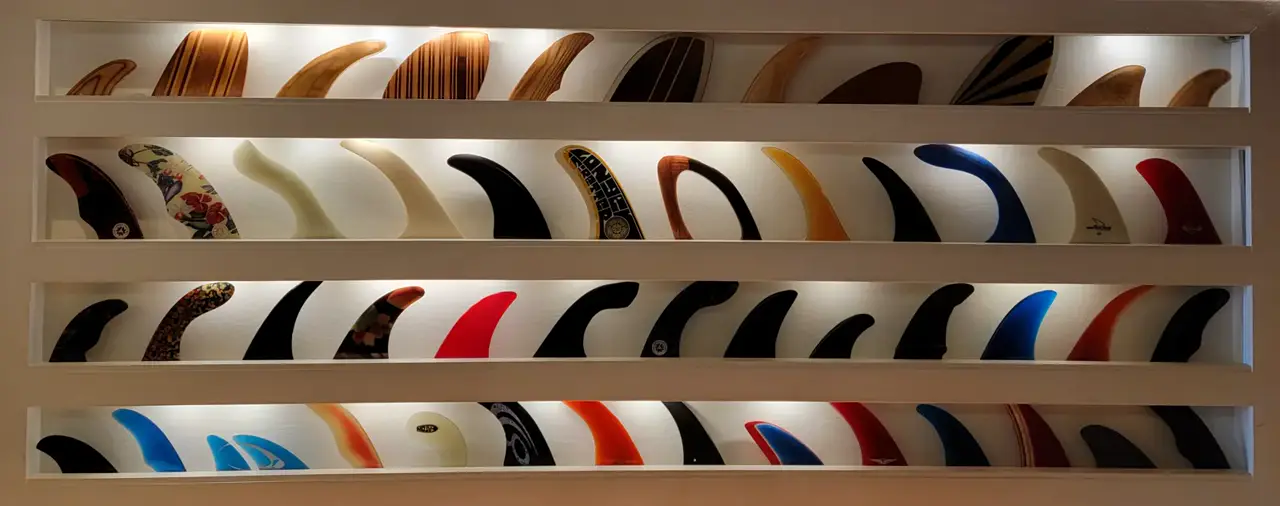
A cutting-edge hull performs poorly without an equally advanced propulsion system underneath. In 2026, fin technology has matched board advancements through 3D variable-foil templates and carbon-infused biomimetic construction.
- Biomimetic Tubercles: Taking cues from marine mammals, fin leading edges now use tiny hydro-tubercles that channel water cleanly across high angles of attack, preventing fin stall during steep drops.
- Carbon-Tuned Tips: Unlike solid molded plastic fins, modern fins combine a rigid composite base with flexible carbon tips, yielding clean whip as you finish off vertical snaps.
To discover how various twin, thruster, and quad configurations interact with these new hulls, explore our comprehensive Fin Systems Guide.
The Best New Surfboards 2026: Real-World Buyer's Verdict
When sifting through marketing brochures for the best new surfboards 2026, keep this reality in mind: technology should serve the wave, not the showroom.
Recent comparative reviews in Stab Magazine highlight that while full carbon boards can feel twitchy in blown-out 6-foot surf, hybrid constructions with targeted carbon stringers consistently outperform legacy PU boards across everyday 2-to-4-foot conditions.
+------------------------------------------------------------+
|             2026 Surfboard Tech Buying Checklist           |
|                                                            |
|  [ ] Does the blank match your typical wave surface chop?  |
|  [ ] Is the resin system compatible with easy repair kits? |
|  [ ] Have you adjusted volume (-0.5L to -1L) for EPS?     |
|  [ ] Are smart sensors functional or battery deadweight?   |
+------------------------------------------------------------+
If you want a board that accelerates through dead sections, choose an advanced carbon EPS surfboard featuring torsional rail flex. If you want sustainable construction that does not ding easily, opt for a volcanic basalt or flax bio-resin model. Treat smart telemetry as a specialized training tool rather than an everyday essential.
Pro Tip: Always weigh your board in the surf shop before buying. Some brands hide heavy internal glassing and resin pools beneath opaque carbon paint jobs. A high-performance 2026 shortboard (around 28-30 Liters) should weigh between 5.0 and 5.7 pounds (2.27 to 2.58 kg) without fins.
Summary: Cutting Through the 2026 Tech Noise
The landscape of new surfboard technology 2026 delivers tangible gains for surfers who prioritize speed, environmental stewardship, and construction durability. While flashy concepts like full-deck sensor displays and motorized hulls make headlines, the genuine triumphs are taking place in chemical laboratories and shaping bays:
- Torsionally tuned EPS cores that eliminate mid-face chatter.
- Recyclable bio-resins that close the composite waste loop.
- Micro-scale telemetry that accelerates technical coaching without weighing down your tail.
Stay skeptical of buzzwords, analyze the underlying materials, calculate your volume accurately, and match your construction directly to your home break's wave energy.
Frequently Asked Questions
What is the most durable new surfboard technology in 2026?
Thermoformed sandwich constructions—featuring a high-density structural foam skin over a recycled EPS core wrapped in basalt or carbon fiber—represent the most durable technology in 2026. These constructions offer up to 40% higher resistance to pressure dings and rail impacts compared to standard single-wrap polyurethane surfboards.
Does a carbon EPS surfboard float better than a traditional PU board?
EPS foam has a lower physical density and higher air cell volume than polyurethane foam, giving it greater buoyant lift per square inch. While 30 liters of water displacement remains mathematically identical across materials, an EPS board sits higher on the water's surface, paddles noticeably faster, and skips over flat wave shoulders with less drag.
Are smart surfboard sensors legal in official surf competitions?
Under updated 2026 competition frameworks, passive recording sensors that store performance data internally for post-heat analysis are legal in most professional and amateur circuits, provided they fit flush within the board's standard contours. However, devices that offer real-time electronic coaching prompts or motorized trim adjustments remain strictly prohibited in official competition heats.
Can I repair a 2026 bio-resin or carbon board with regular polyester resin?
No. You should never apply polyester repair resin to an EPS or bio-composite board. The styrene present in polyester resin will instantly melt an EPS foam blank. Always use high-clarity UV or two-part epoxy repair resin when fixing cracks and dings on modern carbon, bio-resin, or composite surfboards.
Is new surfboard technology 2026 worth the extra cost for intermediate surfers?
Yes, particularly for boards built with advanced carbon-rail EPS or bio-hybrid composites. Intermediate surfers frequently struggle to maintain momentum through weak sections; the instantaneous spring rebound and lighter swing weight of modern EPS configurations make pumping for speed much easier than on traditional, heavy PU boards.